

The market doesn’t reward bravery.
It rewards discipline.
Over the past few months, several high-quality large caps have quietly drifted toward 52-week lows. When that happens, most investors assume opportunity.
But price alone isn’t opportunity.
Sometimes a 52-week low is a gift.
Sometimes it’s a warning.
This week, I ran five widely followed large-cap names through my discounted cash flow framework.
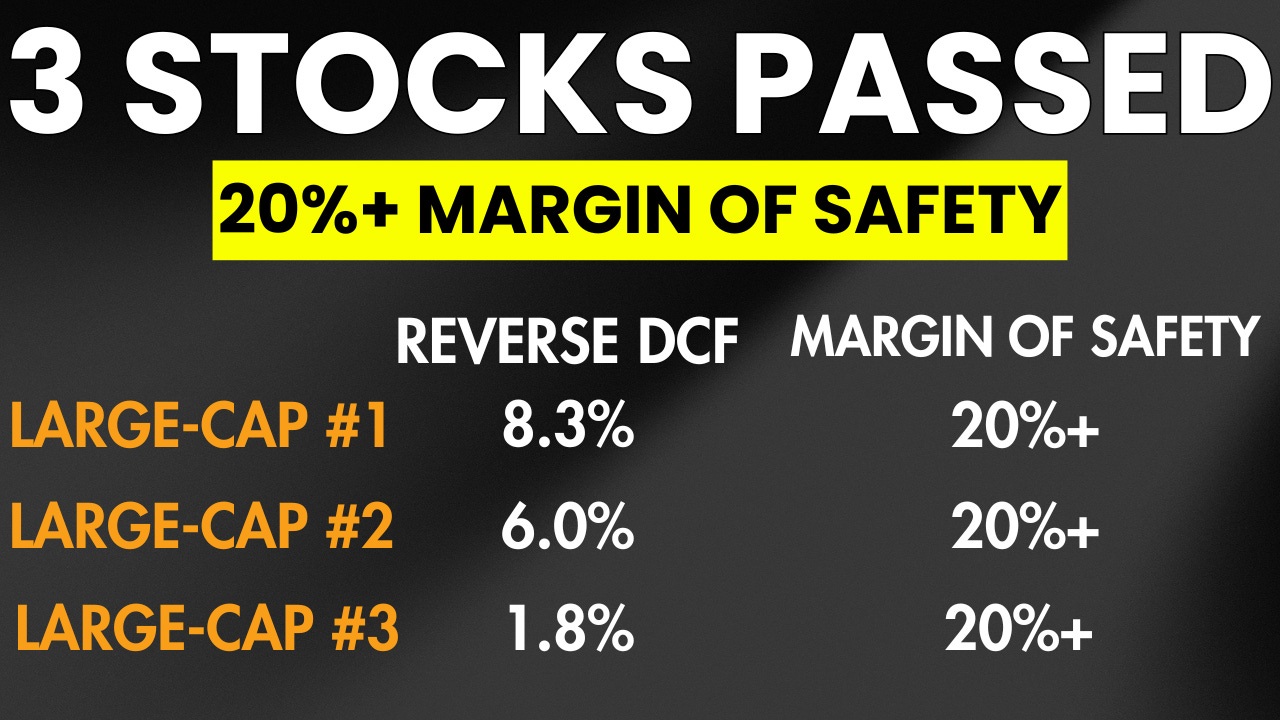
Three cleared my 20%+ margin of safety requirement.
Two failed - despite looking “cheap” on the surface.
Here’s what the numbers actually say.
Why 52-Week Lows Can Be Dangerous
A stock hitting a 52-week low tells you one thing:
Sentiment is weak.
It tells you nothing about intrinsic value.
To qualify as a buy in my framework, a stock must:
• Trade at least 20% below conservative intrinsic value
• Show forward P/E compression vs its 5-year average
• Have implied growth expectations below historical compounding
• Show no structural business deterioration
This week, three names passed.
Let’s start with the first.
1️⃣ Visa (V)
Current Price: $320
Reverse DCF Implied Growth: 8.3%
5Y FCF CAGR: 10%
10Y FCF CAGR: 18%
Forward P/E: 24
5Y Avg Forward P/E: 27
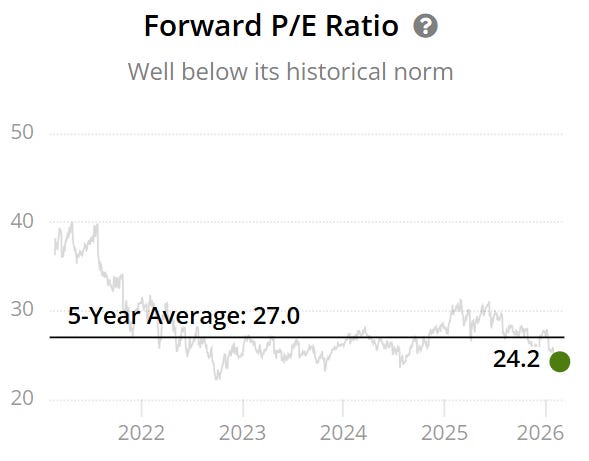
The market is currently pricing Visa as if it will grow free cash flow at roughly 8% long term.
That’s below its 5-year history.
Well below its 10-year compounding rate.
Meanwhile, the forward multiple sits below its historical average - despite no structural damage to the business.
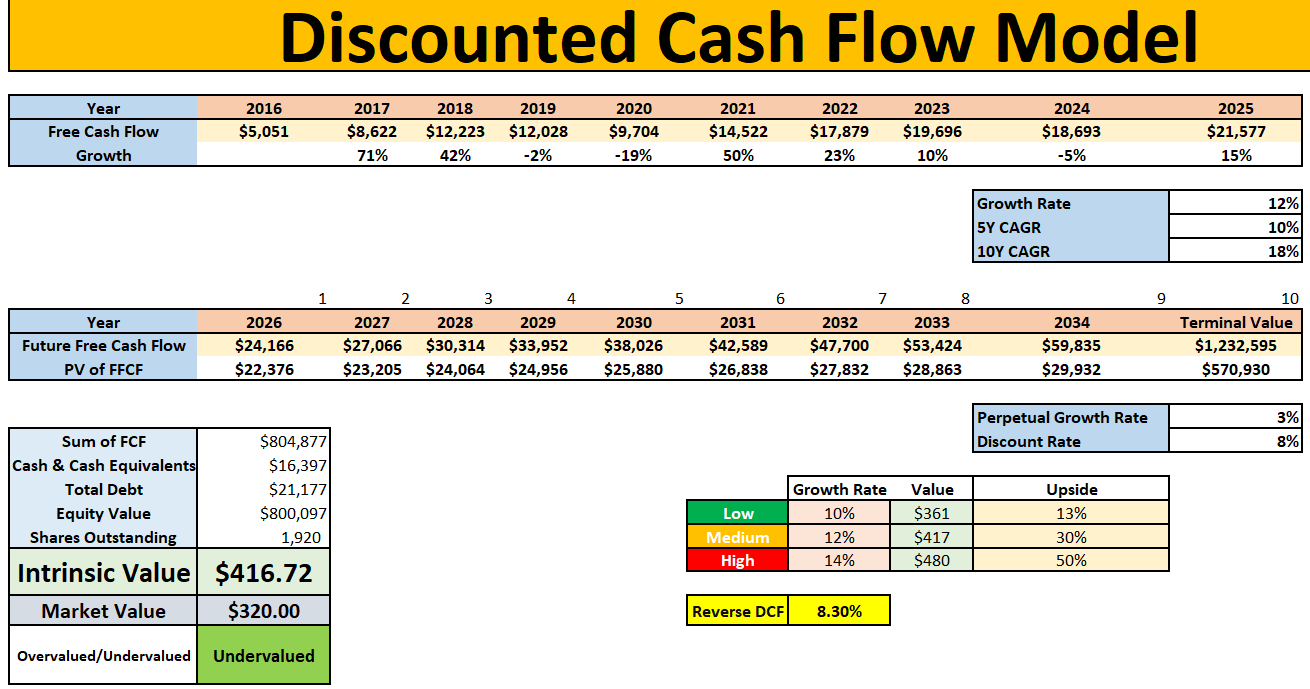
Intrinsic Value Sensitivity
10% growth → $361 (13% upside)
12% growth → $417 (30% upside)
14% growth → $480 (50% upside)
Under a conservative 12% base case, intrinsic value is ~$417.
That implies ~30% upside from current levels.
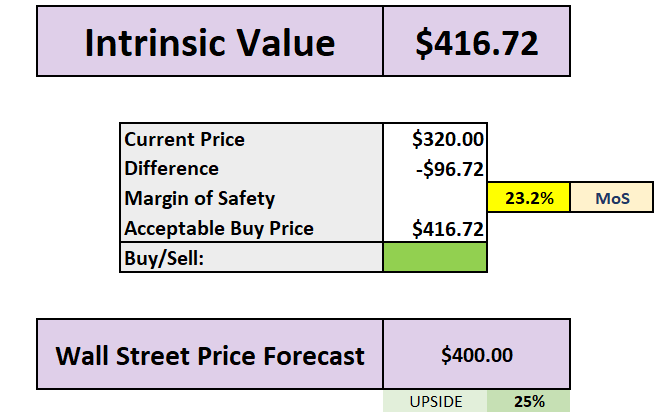
Visa cleared my 20% margin of safety threshold.
Model Status: BUY
🔒 Before continuing:
Starting March 1st, annual membership will increase from £120 to £200.
Over the coming months, I’ll be expanding the depth of each report - including:
• Full DCF models for every highlighted stock
• Reverse DCF expectation analysis
• Bear / base / bull scenario modeling
• Probability-weighted return frameworks
• More detailed downside sensitivity work
If you’re already a member, your rate remains locked in.
If you’ve been considering upgrading, you can secure the current £120/year pricing before March 1st.
The full breakdown continues below.