

The one-minute view
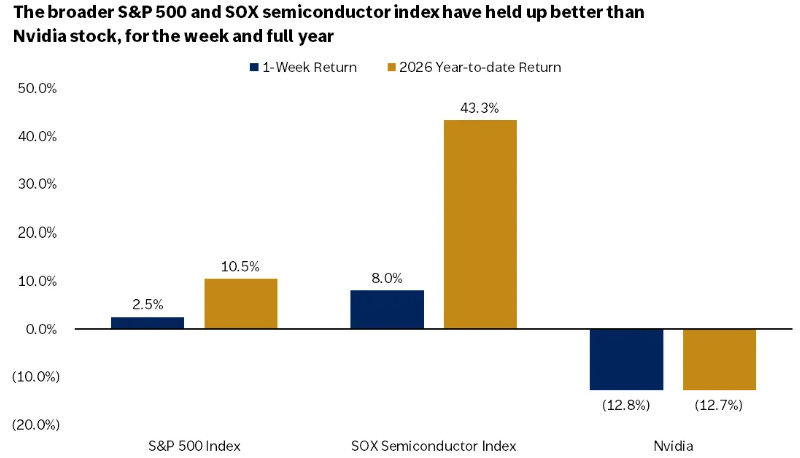
The S&P 500 gained 2.5% last week and the semiconductor index rose about 8%, even as Nvidia fell almost 13%.
Corporate earnings remain supportive: blended S&P 500 earnings growth for the third quarter has reached 32%.
Wall Street sees between 32% and 88% upside across the five companies in today’s screen.
Those targets look spectacular. Our independent valuation work is considerably more restrained.
Only two of the five currently trade inside our 15% margin-of-safety buy zone.
Last week delivered one of the clearest reminders of the year: the stock market is bigger than Nvidia.
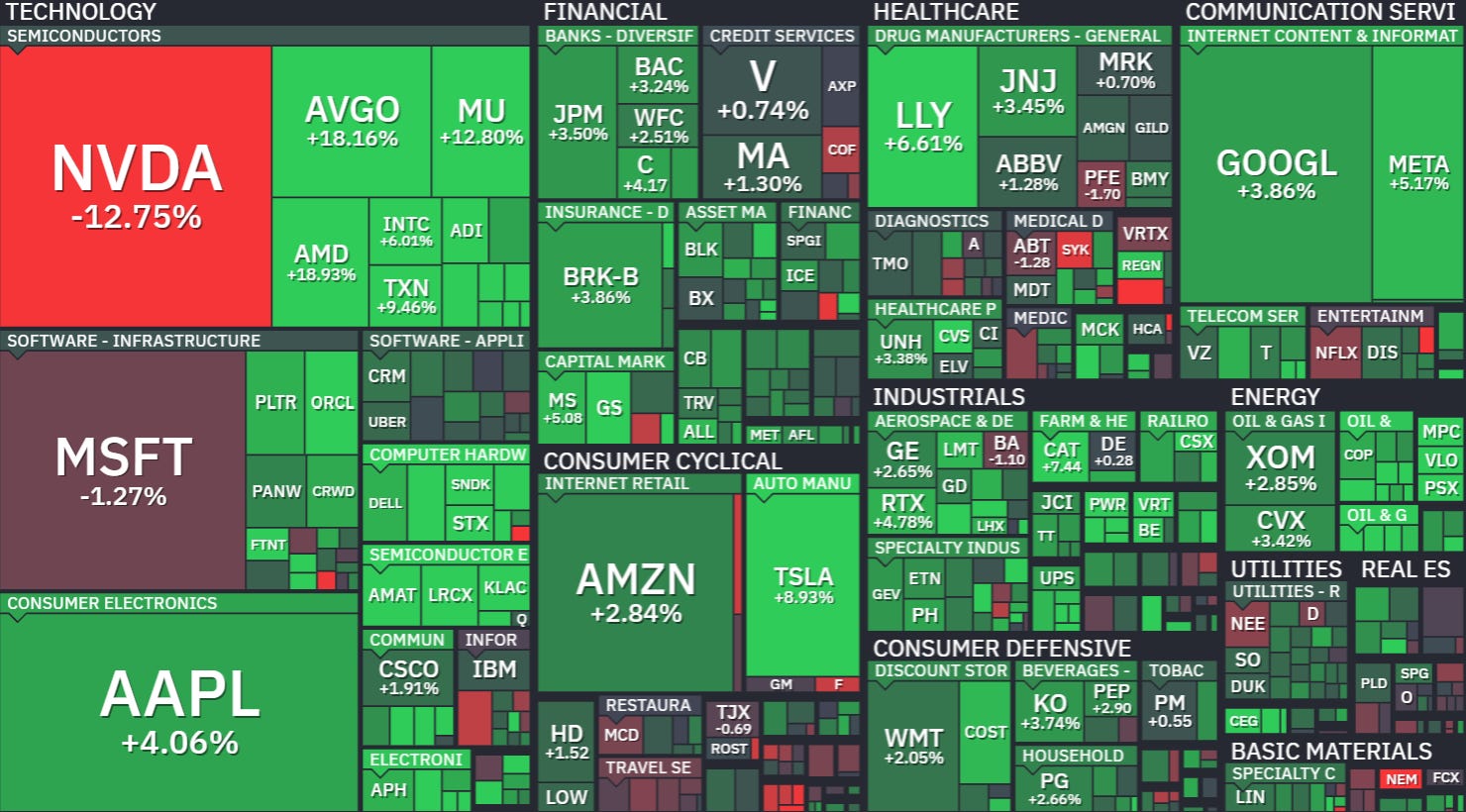
Nvidia fell almost 13% following the sudden departure of Jensen Huang. Yet the S&P 500 gained approximately 2.5%, while the semiconductor index rose around 8%.
That is not what a collapsing AI trade looks like.
It looks more like capital rotating away from one company-specific risk and into other businesses that may still benefit from strong earnings, AI investment and a resilient economy.
To be clear, “forget Nvidia” does not mean Nvidia has suddenly become a bad company, or that Wall Street dislikes it. Analysts still see substantial upside in the shares. The point is that concentrating every investing conversation around one stock can cause us to miss opportunities elsewhere.
So, for this month’s Wall Street Target Audit, I searched for five large companies with consensus targets implying at least 30% upside. I then tested those targets using a more conservative earnings-based valuation, a realistic multiple and a 15% margin of safety.
The result was far more interesting than the original screen.
Wall Street sees enormous upside across all five stocks. Our model says two are currently attractive, two belong on a watchlist and one looks almost perfectly priced.
The market looked beyond Nvidia
The market’s resilience is being supported by more than enthusiasm.
FactSet estimates that blended S&P 500 earnings grew approximately 32% year over year in the third quarter. Around 84% of reporting companies exceeded earnings expectations, better than the five-year average of 78%.
There is an important qualification: companies are beating estimates by only around 3.1% in aggregate, below the normal surprise rate. Earnings are strong, but the bar was already high.
Rates are also applying pressure. The 10-year U.S. Treasury yield ended Friday at approximately 5.15% after hotter inflation data. When investors can earn more from lower-risk assets, expensive stocks must produce stronger cash flows to justify their valuations.
That combination, excellent earnings but a higher cost of capital, is exactly why I do not treat analyst price targets as automatic buy signals.
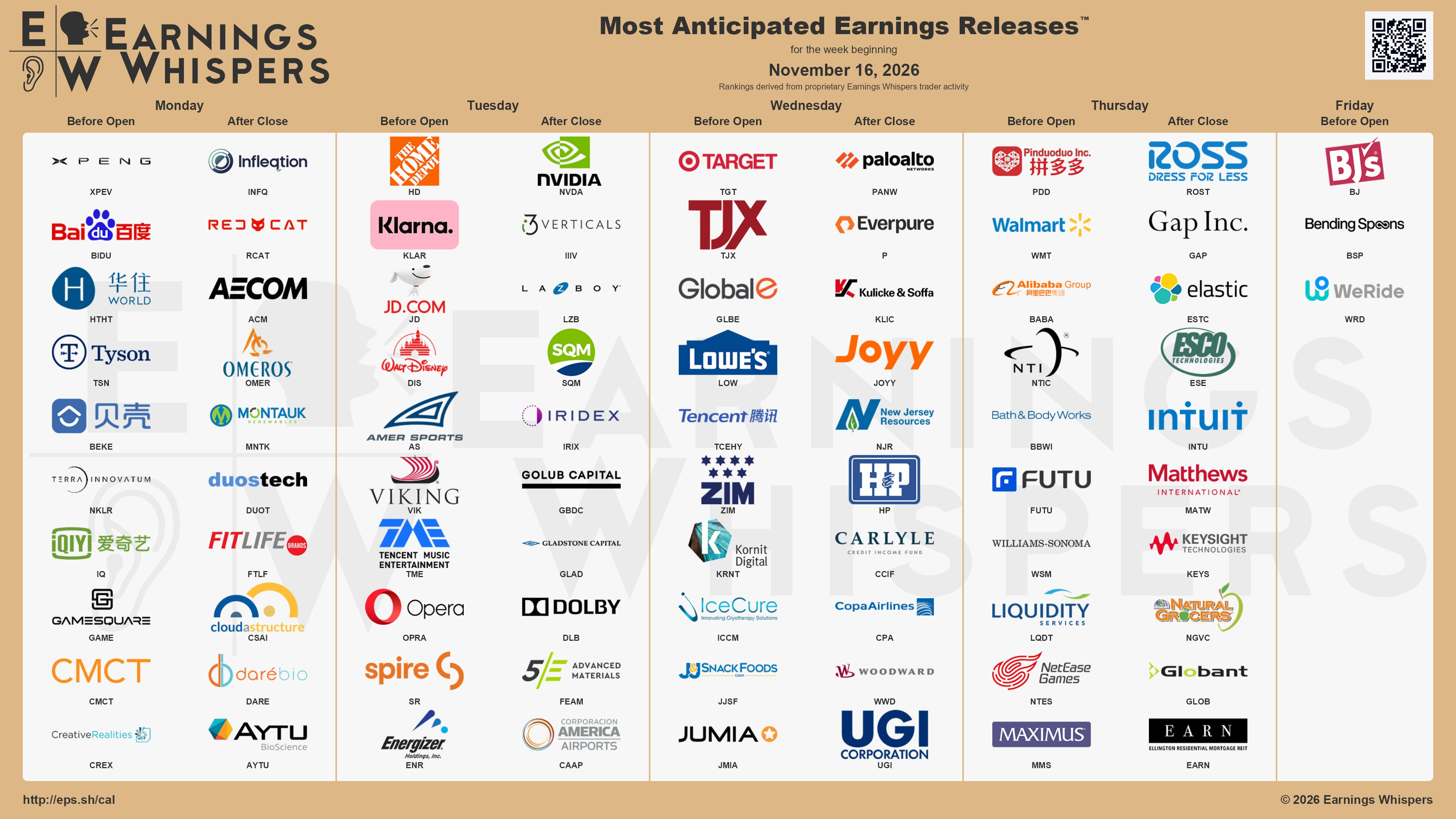
Nvidia reports earnings on Tuesday, November 17, and Anthropic is expected to begin trading later in the week. Both could create more volatility, but neither changes the discipline required when selecting individual stocks.
The five stocks Wall Street loves

At first glance, this table looks like a shopping list.
It is not.
An analyst target is a forecast, not a promise. Targets often assume that earnings grow as expected, margins remain healthy and investors continue paying a particular valuation multiple. If any of those assumptions change, the target can fall quickly.
Oracle demonstrates this perfectly. The lowest published target in the analyst range is $110; the highest is $400. That is not a small disagreement. It is an enormous gap between two very different visions of the company’s future.
The useful question is therefore not simply, “Which stock has the highest target?”
It is:
How much must go right to reach that target, and what price gives us protection if Wall Street is wrong?
Free stock analysis: Meta Platforms
Meta is the ideal example of why a wonderful company is not automatically a wonderful investment at every price.
Why Wall Street remains bullish
Meta’s core advertising engine is exceptionally strong.
Third-quarter revenue increased 26% to $64.6 billion. Ad impressions rose 10%, while the average price per advertisement increased 14%. Family daily active people reached approximately 3.64 billion, up 3% year over year.
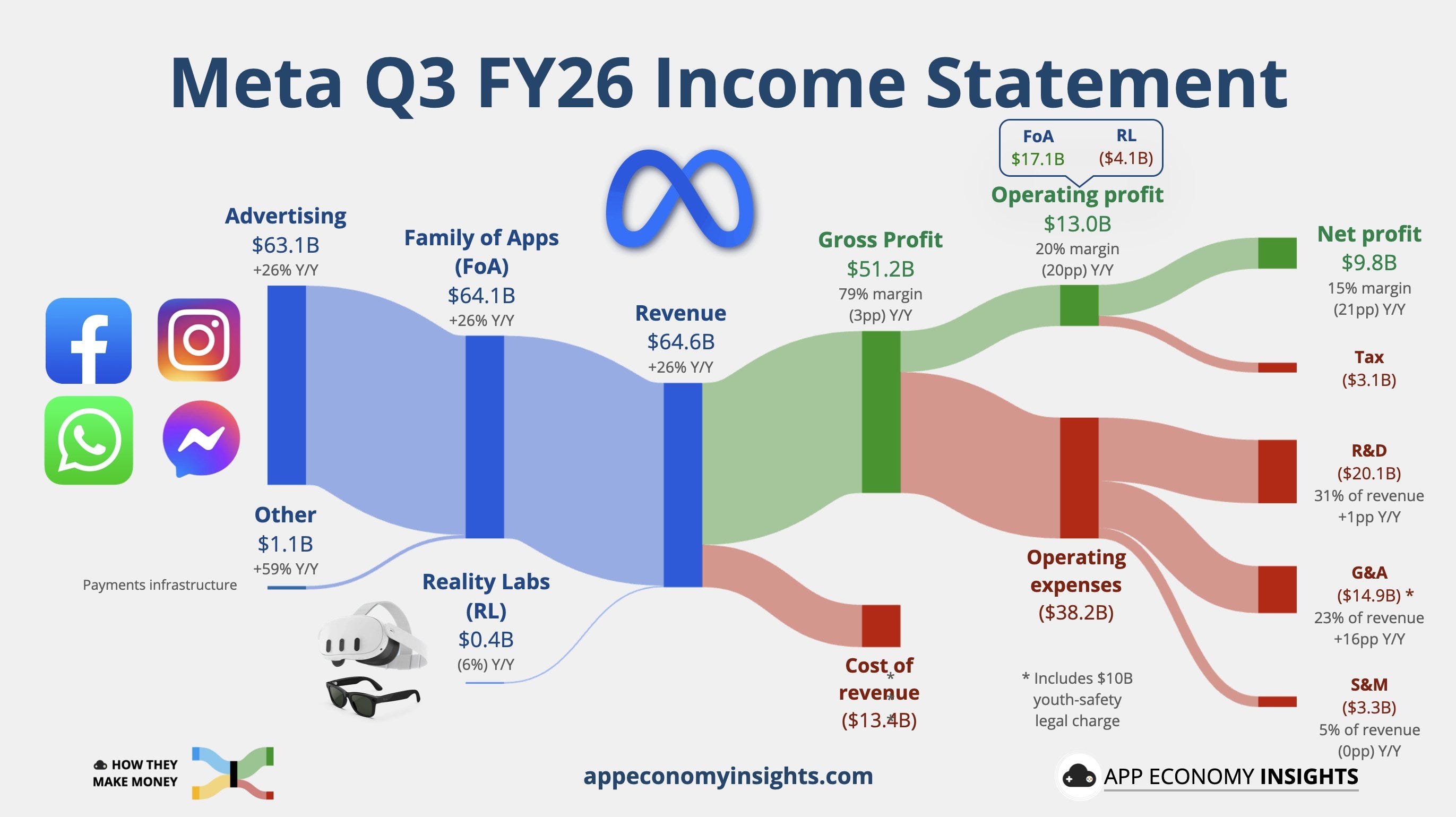
Those numbers suggest that Meta’s AI investments are already improving recommendations, engagement and advertising efficiency. Unlike many companies discussing AI, Meta has a huge existing platform through which it can monetise those improvements.
The company also ended the quarter with approximately $82.5 billion in cash, cash equivalents and marketable securities. The balance sheet is not the concern.
What concerns me
The scale of Meta’s investment programme is extraordinary.
Capital expenditure, including principal payments on finance leases, reached $34 billion in the third quarter alone. Management now expects 2026 capital expenditure of between $135 billion and $145 billion.
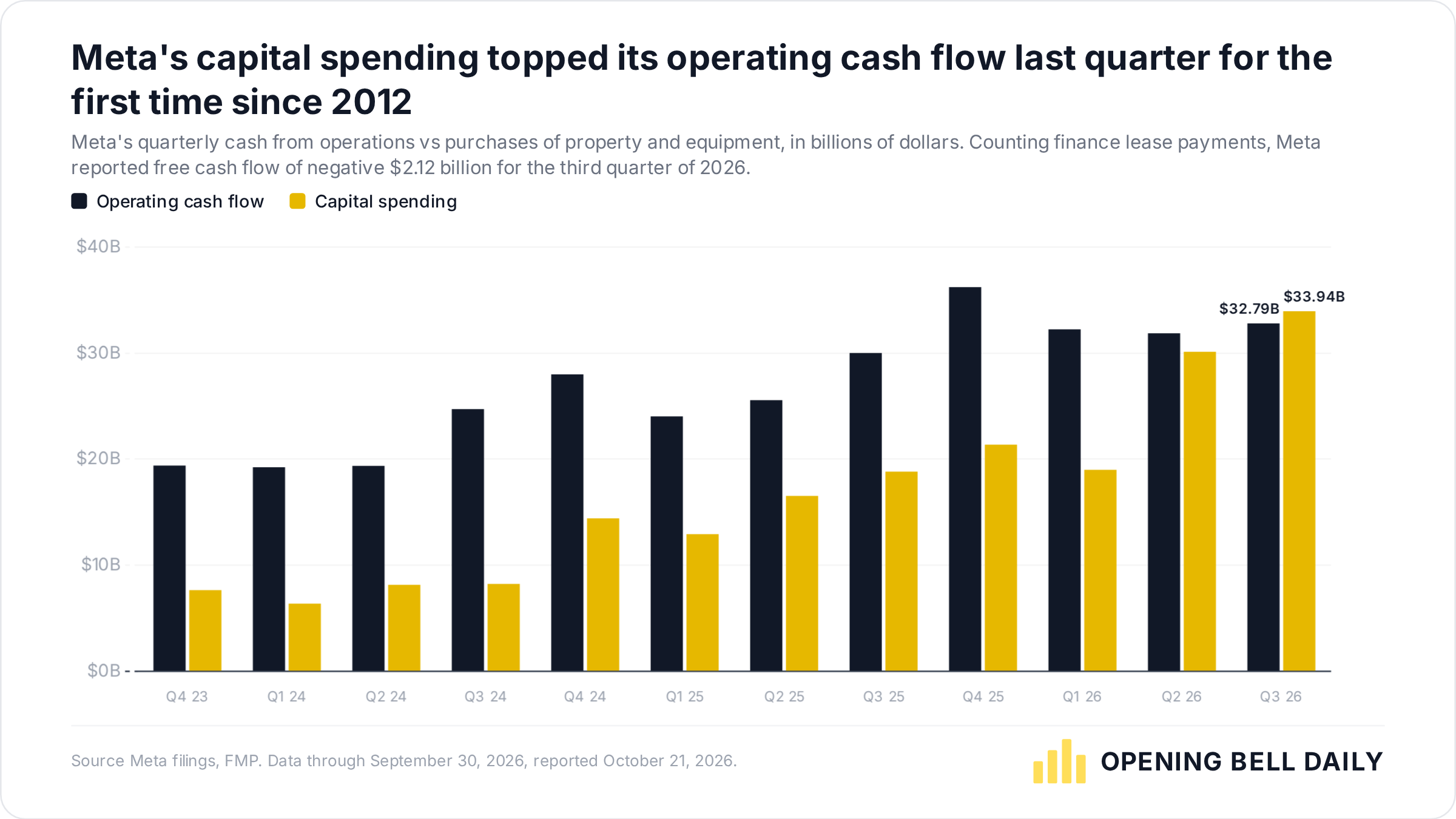
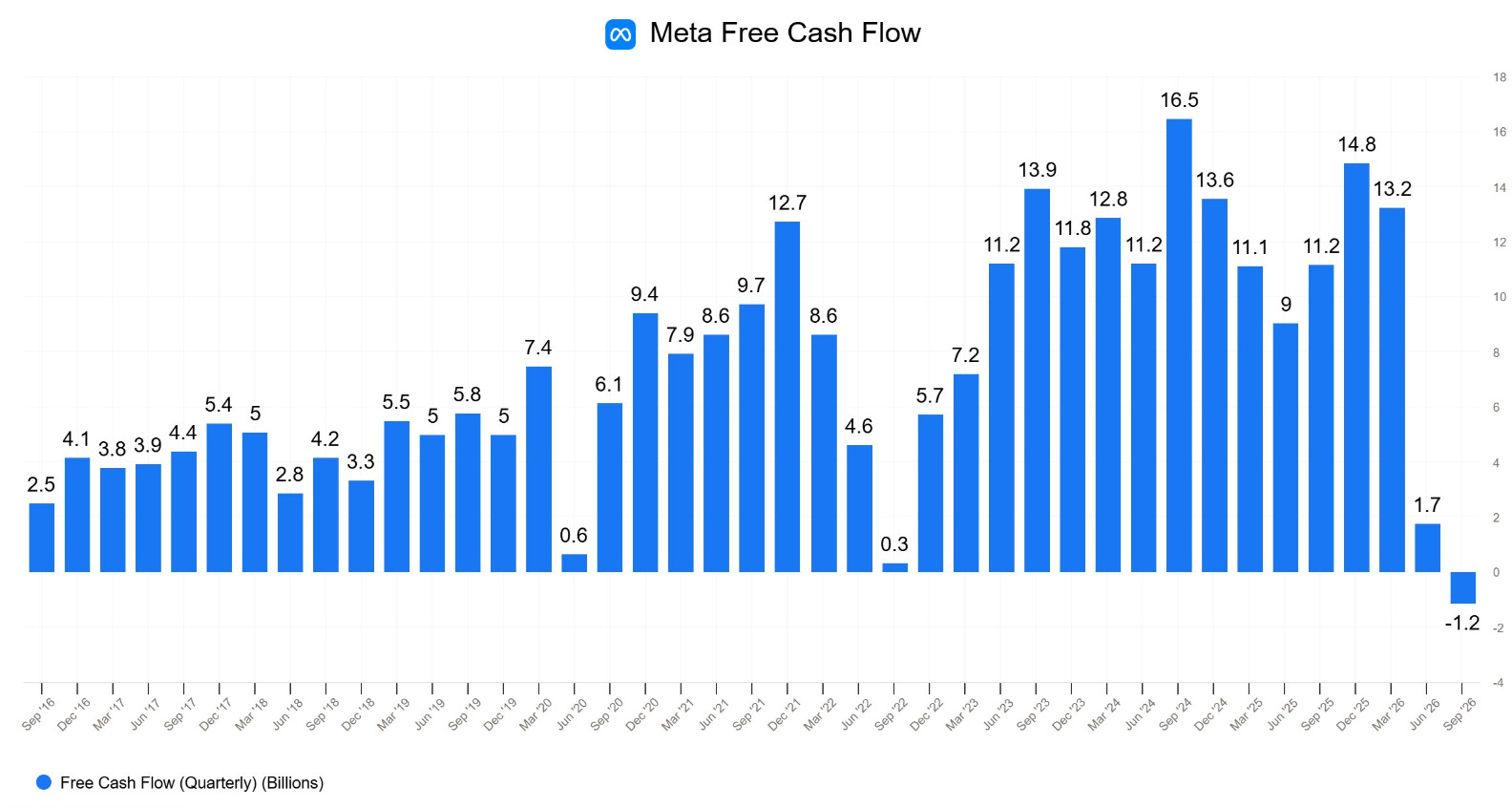
As a result, company-defined free cash flow was negative $1.2 billion for the quarter despite $32.8 billion of operating cash flow.
Meta also recorded a $9.9 billion litigation charge during the quarter and continues to face regulatory and youth-safety risks across several markets.
The underlying business remains excellent, but investors are being asked to trust that today’s enormous infrastructure spending will produce sufficient future returns.
Our valuation
Wall Street’s average target of $851 implies approximately 33% upside.
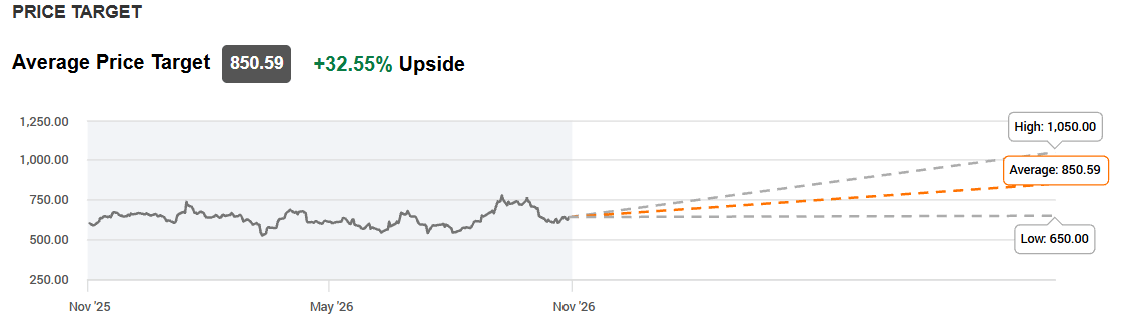
Our model starts with estimated fiscal 2027 earnings of $35.59 per share, applies a 5% earnings haircut and uses a 19-times earnings multiple. That produces an estimated value of approximately $642 per share, almost exactly where Meta trades today.
After applying a 15% margin of safety, our preferred buy-below price falls to approximately $546.
Meta verdict: excellent company, fair price
Meta is not overvalued enough to call it a sell, but the present price offers very little protection if capital expenditure remains elevated or growth disappoints.
I would classify Meta as a Hold/Watch, not a fresh Buy.
That conclusion is less exciting than a target promising 33% upside. It is also more useful.
Two stocks passed. Three did not.
Paid subscribers can continue below to receive:
The complete ranking from number one to number five
The two stocks currently inside our buy zone
Exact model values and buy-below prices for every company
The most important catalyst and risk for each stock
A downside stress test, not just a bullish target
The downloadable, editable Wall Street Upside Report, including company briefs, valuation assumptions and source links
An annual subscription is £200, compared with £300 across twelve monthly payments, a saving of £100.
That works out at less than £4 per week. This is not a one-off spreadsheet: paid members receive the monthly valuation report alongside the ongoing Buy/Hold/Avoid research used to turn market noise into an actionable watchlist.