

Even with the S&P 500 sitting near record highs, investor sentiment is still flashing fear.
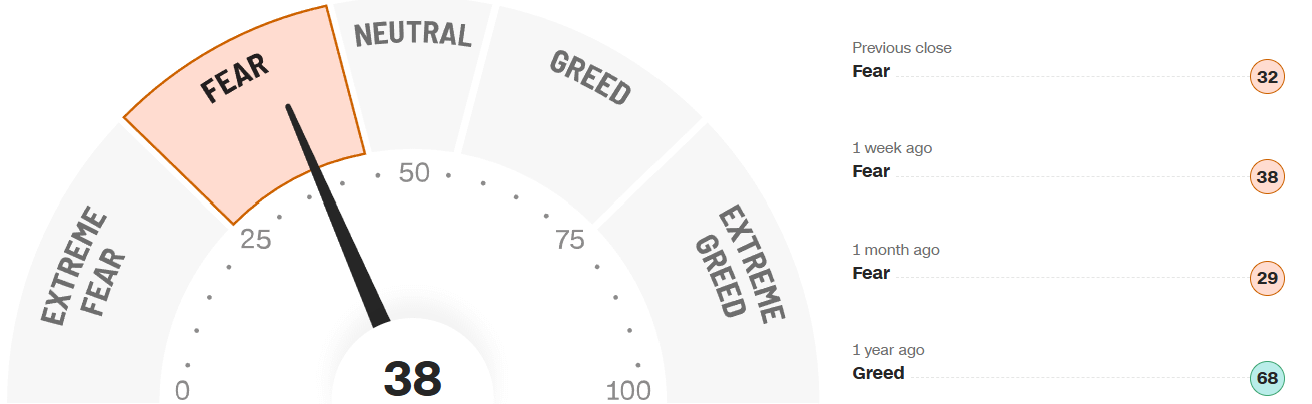
That contrast matters.
On the surface, this market looks expensive, crowded and increasingly difficult to navigate. But underneath the headline index, the picture is far more interesting.
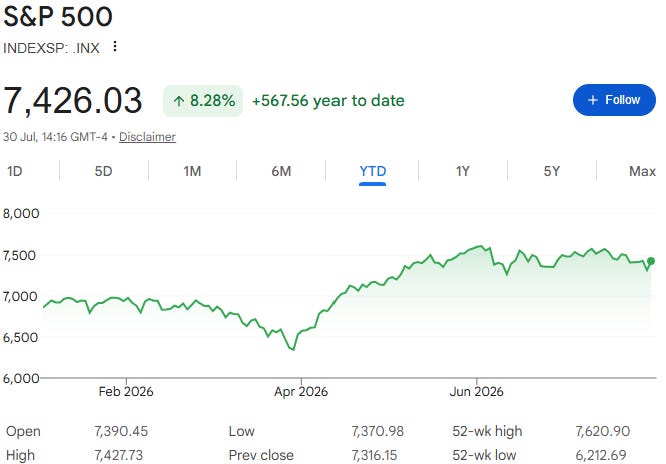
The S&P 500 is up more than 8% for the year.
By headline level, that looks like a strong market. But an index return alone does not tell us where the underlying opportunities are or how unevenly those returns are being distributed.
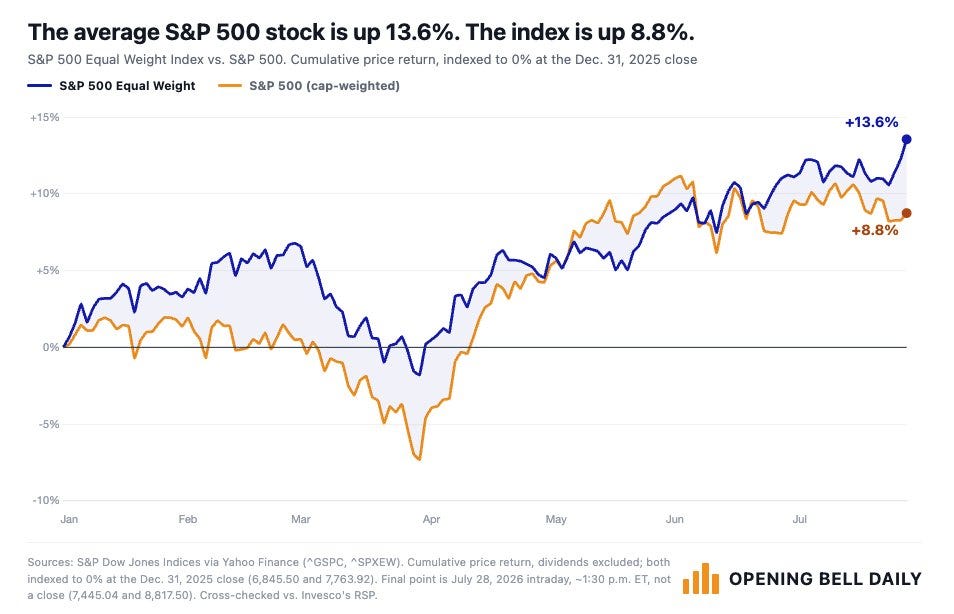
The average S&P 500 stock has performed better than the traditional market-cap-weighted index.
That tells us the market has been broadening beyond a small group of mega-cap winners.
This is no longer simply a case of buying the largest technology companies and expecting them all to move together.
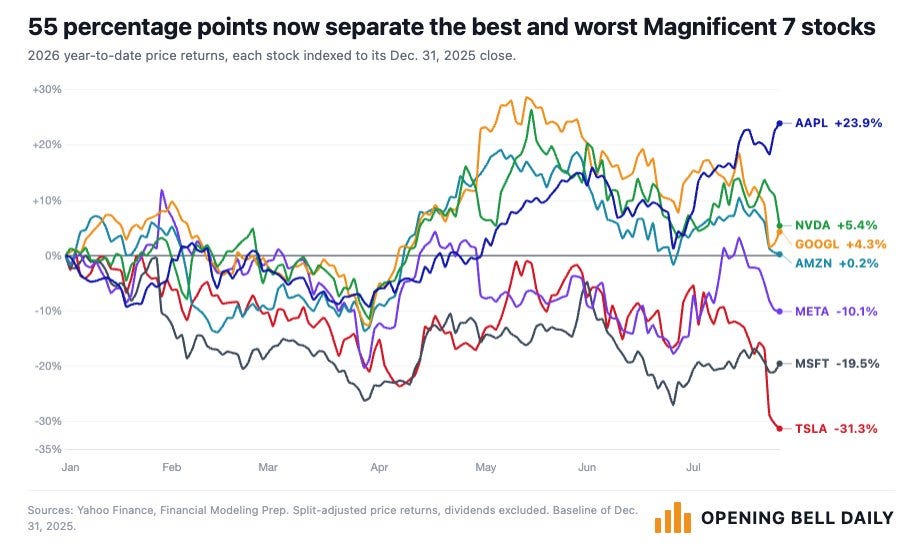
The divergence inside the Magnificent 7 makes that especially clear.
Around 55 percentage points separated the best and worst-performing members of the group by late July. Some remain firmly in positive territory, while others have fallen deeply into the red.
Lumping every mega-cap technology company into the same trade therefore makes increasingly little sense.
The quality, expectations and valuation attached to each business now matter far more.
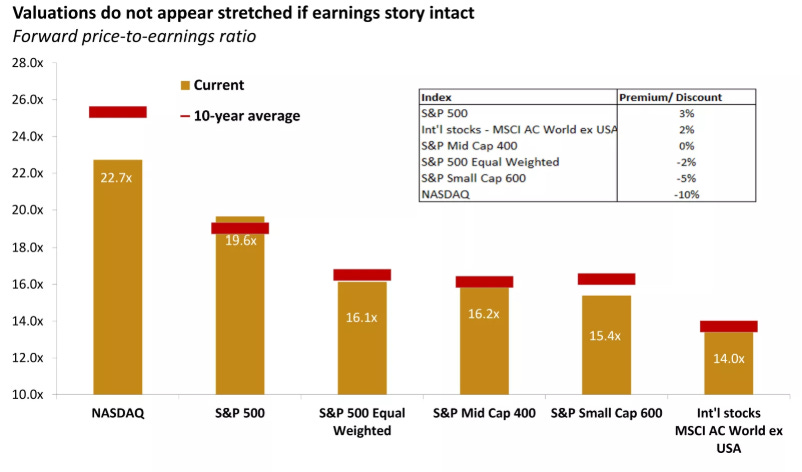
At the same time, valuations are not stretched everywhere.
The broad market is not cheap, and long-term measures such as the Shiller CAPE remain uncomfortable. But forward valuations across equal-weighted stocks, mid-caps, small-caps and international equities are far less demanding than the most expensive headline numbers suggest.
There are still pockets where earnings can justify the current multiple.
This is becoming much more of a stock-picker’s market.
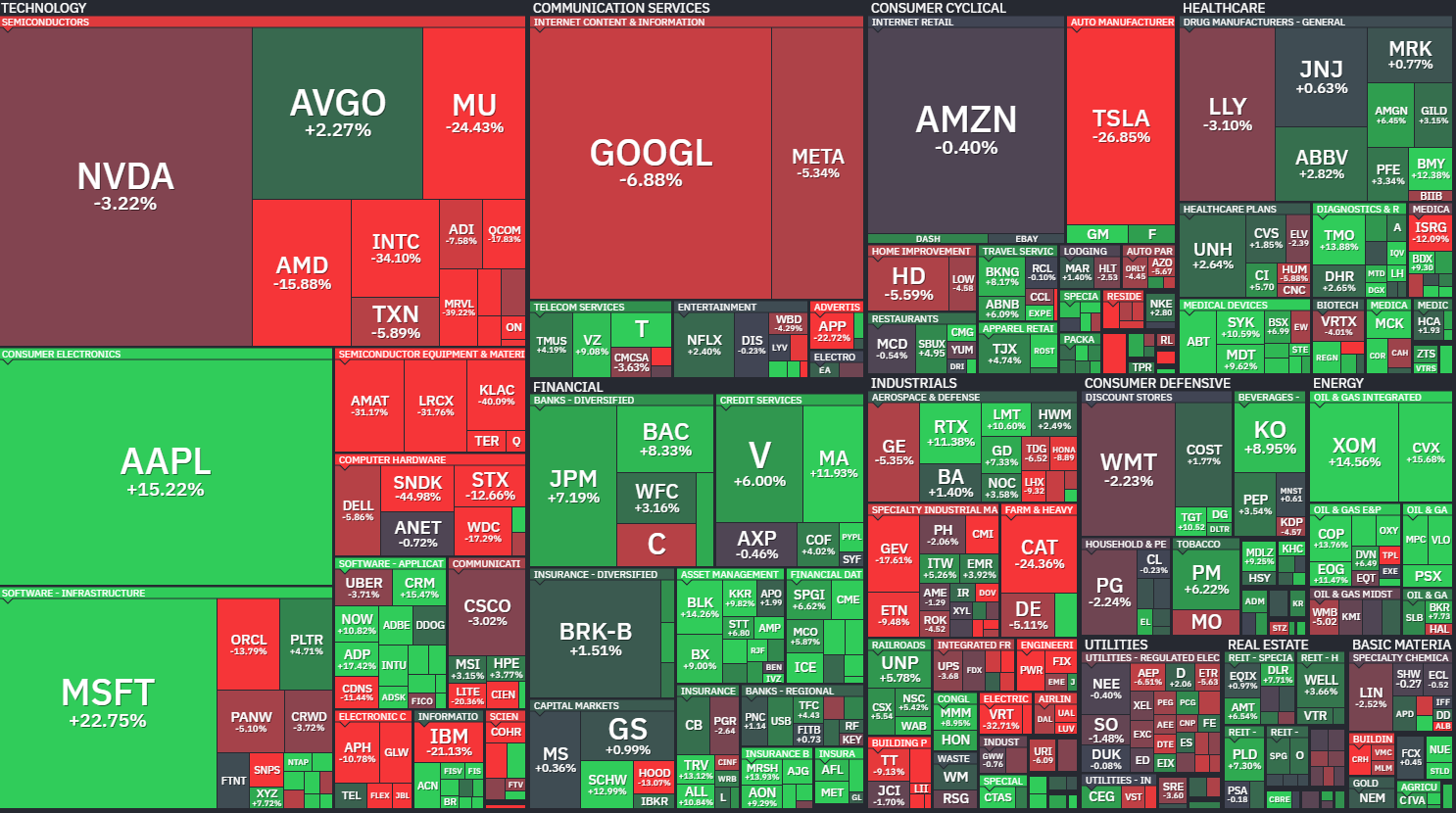
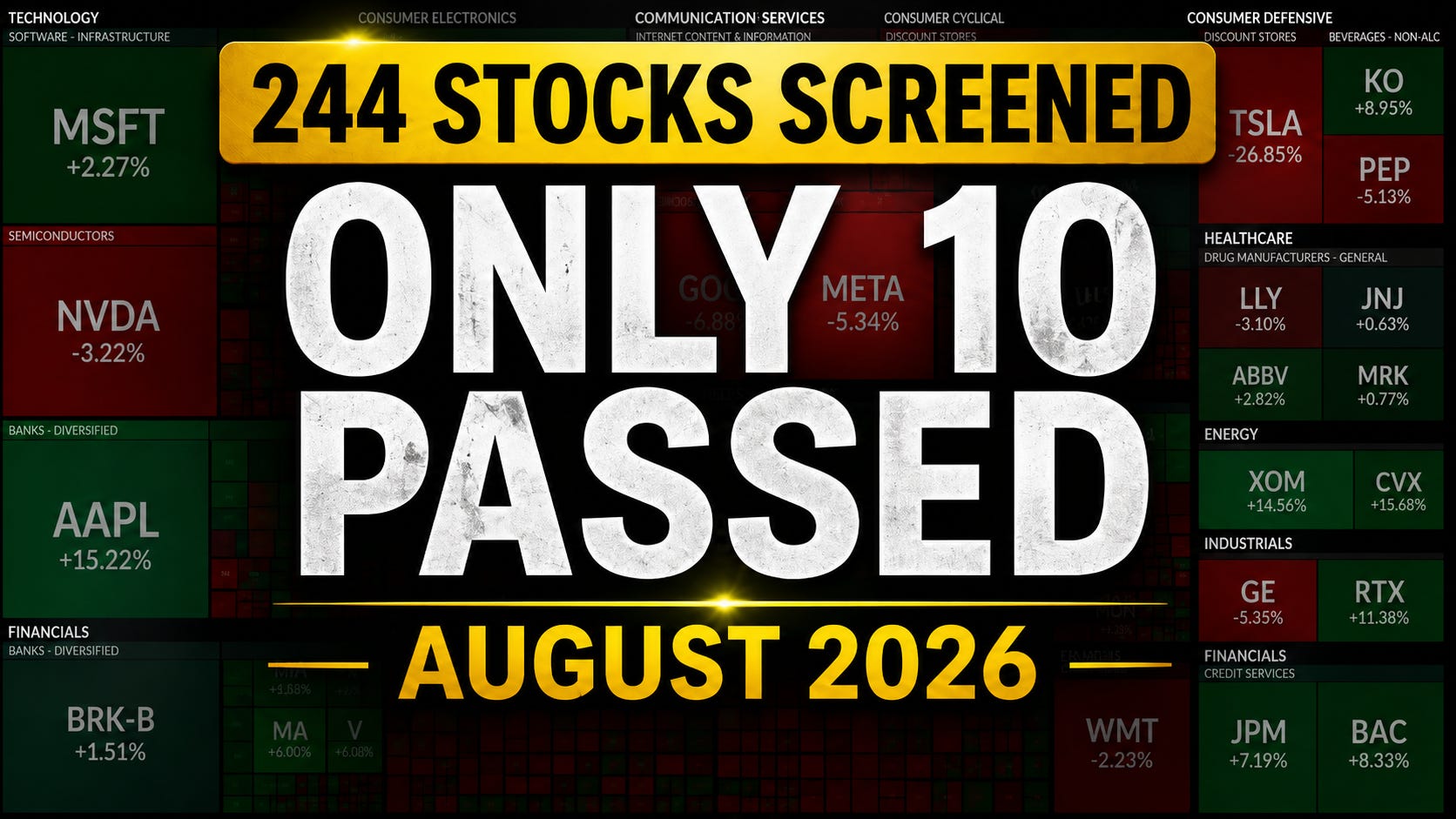
The July heatmap reinforces that point.
There were major winners, violent declines and substantial rotation both between and within sectors.
That is exactly the kind of market where a disciplined screening process becomes valuable.
So for August, I screened 244 stocks, ranked them across valuation, quality, risk, income and data confidence, and narrowed the universe down to the ten opportunities I believe deserve the closest attention.
That table is the final output of the August screen but there is an important distinction:
Ten stocks made my final ranking. I am not calling all ten outright buys today.
Six currently fall into my Buy in Tranches or Accumulate categories.
The remaining four are businesses I would rather purchase at a better price, after fresh earnings or only once I have greater confidence in the valuation.
That selectivity matters.
A stock can score highly because it appears inexpensive, but that does not automatically make it investable.
An unusually high estimated value might be stale. A low earnings multiple could be masking deteriorating profits. And an exceptional company can still be a poor investment at the wrong price.
For every stock that made the final list, I therefore assigned:
A clear action
An estimated valuation range
The main reason it could outperform
The most important threat to the thesis
The next result or development I will be watching
Before revealing the complete ranking, I want to share one of the ten selections with every reader.
One August Pick I’m Sharing for Free
No. 2: Meta Platforms
Action: Buy in tranches
Value basis: My DCF
Estimated value: $743
Estimated upside: approximately 38%
Meta’s latest earnings created one of the most interesting disconnects in the market.
The shares sold off sharply, but the underlying advertising business remained exceptionally strong.
Quarterly revenue increased 28% to $60.8 billion. Ad impressions across the Family of Apps rose 14%, while the average price per advertisement increased another 12%.
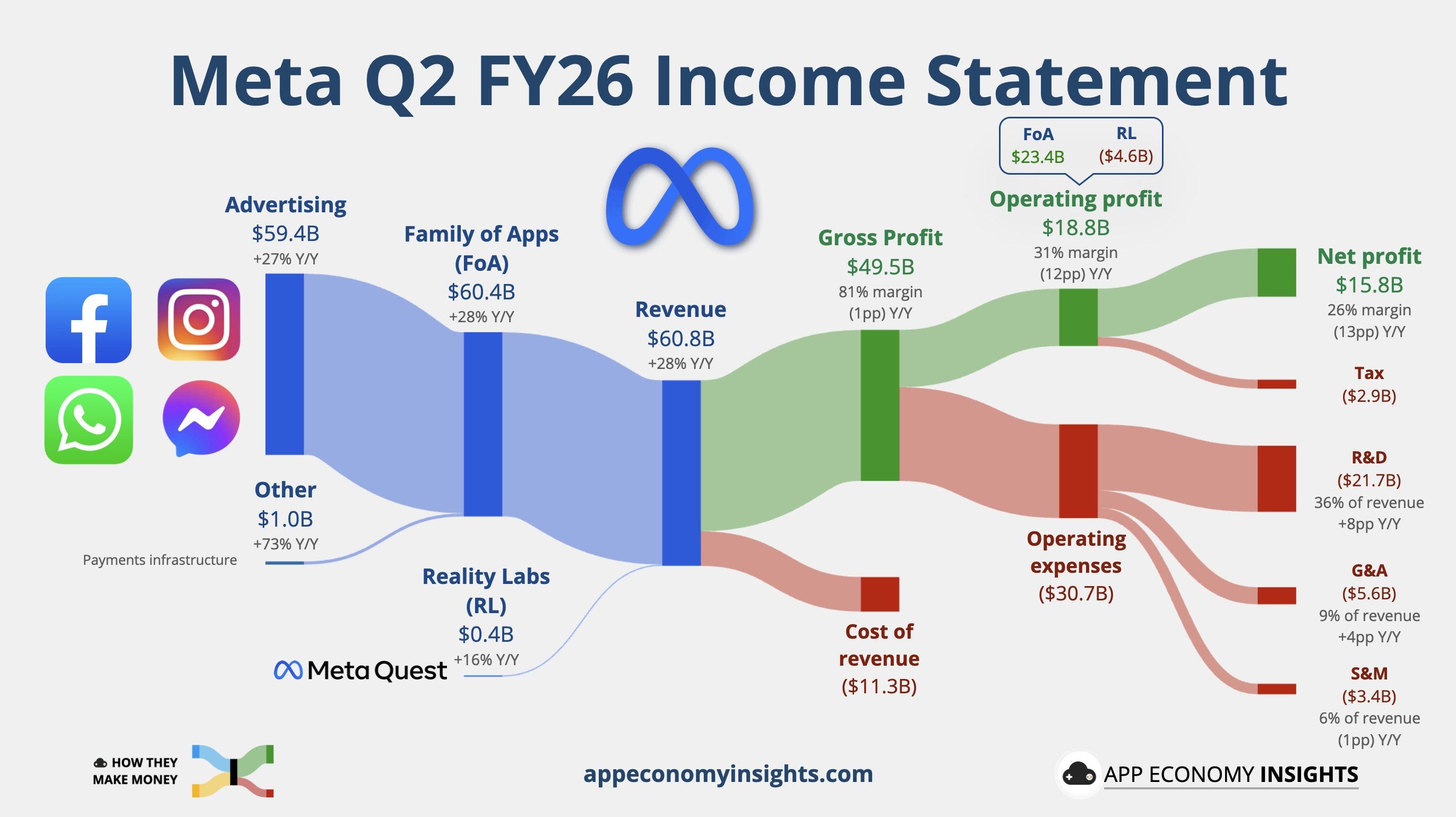
Those are not the numbers of a core business losing momentum.
Why did the stock fall?
The concern was not revenue. It was the cost of delivering that growth.
Meta’s total costs increased 55%, its operating margin fell from 43% to 31%, capital expenditure reached $31.1 billion, and quarterly free cash flow collapsed to just $784 million. Management now expects 2026 capital expenditure of between $130 billion and $145 billion.
Investors are therefore being asked to trust that today’s extraordinary infrastructure spending will generate sufficient returns in future years.
That is the central question surrounding Meta now:
Is this a temporary free-cash-flow collapse caused by a major investment cycle or the beginning of structurally lower returns?
Why it still made my Top 10
The expenditure risk is real, but so is the strength of Meta’s core business.
Its advertising engine continues to grow at a rate that most companies of this size could not replicate. Management is also guiding for third-quarter revenue of between $61 billion and $64 billion, suggesting that demand remains healthy even as the company absorbs much heavier infrastructure costs.
At the price used in my August workbook, my $743 DCF estimate leaves approximately 38% potential upside.
I would not treat that as a guaranteed destination. The valuation depends on Meta converting its AI investment into sustained revenue growth while eventually restoring stronger cash conversion.
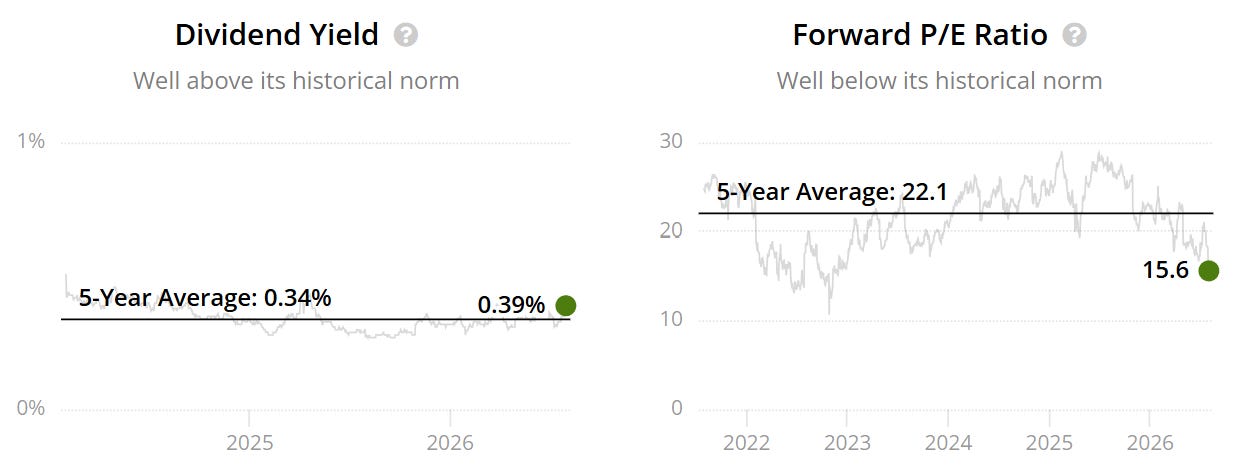
But the post-earnings decline has improved the balance between risk and potential reward.
My action
I would buy Meta in tranches, rather than establishing a full position immediately.
An initial allocation gives exposure to one of the strongest advertising franchises in the world. Keeping capital back provides room to add if:
The market becomes more concerned about expenditure
The stock falls further without a comparable deterioration in the business
Future results demonstrate that AI spending is producing measurable returns
Meta is not the safest selection in the August list but at the current valuation, I believe the potential reward now justifies accepting the higher uncertainty.
The Complete August Report
Meta is only one of the ten stocks that made my final list.
Premium members receive:
The complete August Top 10 and my action for every stock
The six opportunities I would buy or accumulate today
Full analysis of the No. 1 selection, NVIDIA and the leading value and income ideas
A concise investment case for every remaining stock
Bear, base and bull valuation scenarios
Estimated buy-below prices
The complete 244-stock ranked screener
The downloadable August premium workbook
The stocks that narrowly missed the final list and why
Continue reading and download the complete August workbook containing all 244 stocks, valuation scenarios and action categories.
Annual members receive both of my flagship monthly research releases: the full market screen and the mid-month DCF report.