

Sell in May? I’m Looking For High-Upside Stocks Instead
Every year around this time, investors hear the same phrase.
“Sell in May and go away.”
And to be fair, there is some historical evidence behind it.
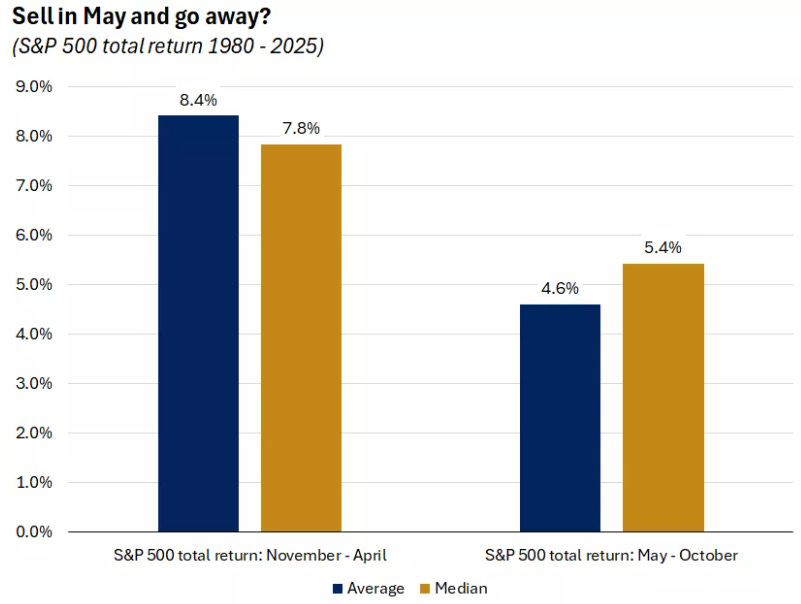
The May to October period has historically delivered lower average returns than the November to April period. Since 1980, the S&P 500 total return index has produced an average return of around 8.4% between November and April, compared with around 4.6% between May and October.
But this is where investors need to be careful.
Lower average returns do not automatically mean investors should sell everything, move to cash, and try to time their way back in later.
Because that requires getting two very difficult decisions right.
First, when to sell.
Second, when to buy back in.
And history has shown repeatedly that most investors are not very good at timing either side.
So while I do think the market has had a strong move and could easily pause, consolidate, or become more volatile through the summer, I do not think “sell everything and go away” is a serious investment strategy.
Instead, I think the better approach is this:
Stay invested. Stay selective. And build a watchlist before volatility returns.
That is exactly what this month’s paid subscriber spreadsheet is designed to do.
The Market Is Strong - But Not Cheap Everywhere
One reason the “sell in May” discussion is getting louder is because the market has already had a very strong year.
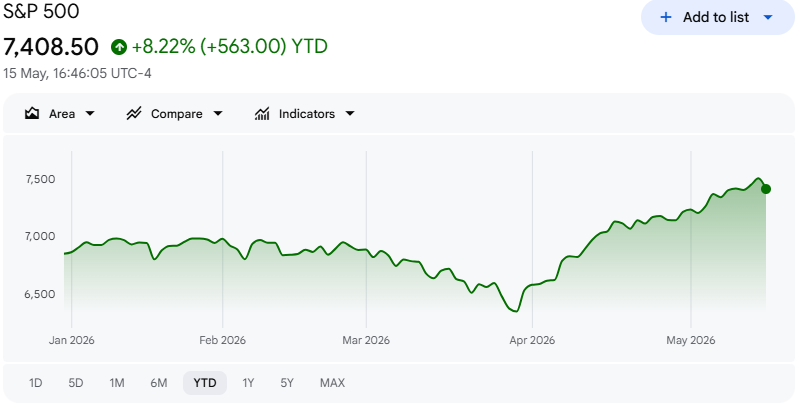
The S&P 500 is up more than 8% year-to-date, and after the correction earlier this year, the rebound has been sharp.
This creates a difficult environment for investors.
On one hand, the index is back near highs.
On the other hand, the underlying market is not as simple as “everything is expensive.”
Some areas have run very hard. Some areas still look stretched. But other areas remain unloved, ignored, or priced for weaker outcomes than may actually happen.
That is why I do not think the correct question is simply:
“Should I sell?”
A better question is:
“Where is the market still mispricing future upside?”
That is the question I wanted to answer with this month’s high-upside screen.
Earnings Are Still Supporting The Market
The main reason I am not aggressively bearish here is that the move higher has not happened in a complete vacuum.
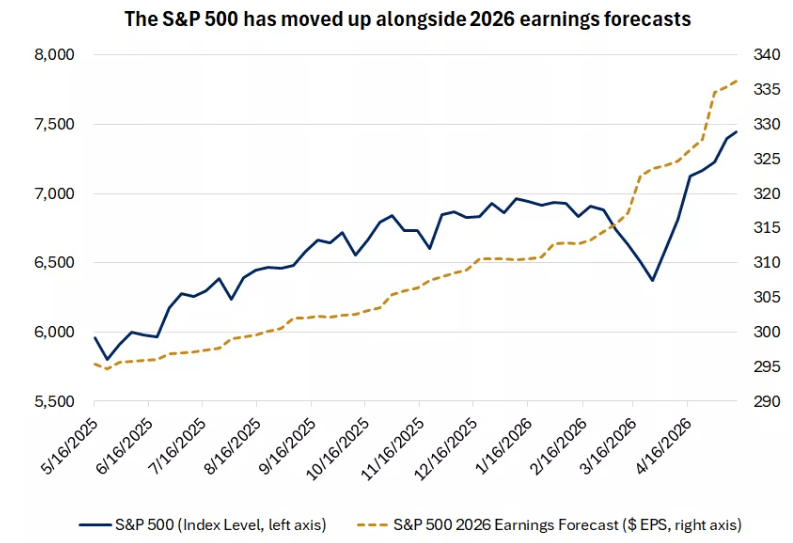
Earnings expectations have also been moving higher.
The S&P 500 has rallied alongside improving 2026 earnings forecasts, which suggests part of the market move is being supported by fundamentals rather than just sentiment or multiple expansion.
This matters.
If the market was rising while earnings expectations were collapsing, that would be a much more worrying setup.
But right now, the earnings picture remains relatively resilient.
The labour market has held up better than many expected. Consumers are still spending. Corporate earnings are still coming through. And in certain areas, especially technology, AI, semiconductors, energy, and materials, earnings expectations have actually improved.
That does not mean there are no risks.
It simply means the bearish case is not as obvious as saying:
“The market is near highs, therefore it must crash.”
Markets can be expensive and still move higher.
Markets can look stretched and still consolidate sideways.
And markets can be strong at the index level while still offering opportunities underneath the surface.
Oil Is A Risk - But The Market Is Not Pricing Permanent Panic
One of the biggest macro risks right now is oil.
Higher oil prices can put pressure on consumers, keep inflation stickier for longer, and make life harder for central banks.
But the important point is that the oil futures curve is not currently pricing oil staying extremely elevated forever.
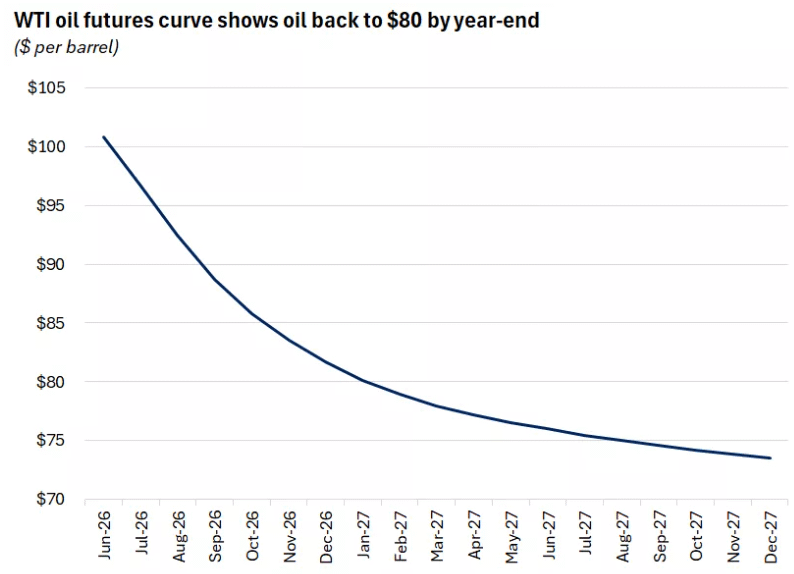
The market appears to be pricing the recent oil spike as a risk, but not yet as a permanent shock.
That can change.
If oil remains higher for longer, inflation could become more stubborn, the consumer could weaken, and the Federal Reserve may have less room to cut rates.
But for now, markets seem to be looking through the risk because earnings remain solid and investors believe oil prices may moderate over time.
This is why I think the current setup requires balance.
Not blind bullishness.
Not panic selling.
Balance.
Sentiment Has Moved Back Into Greed
The other reason I would be more selective today is sentiment.
A few months ago, there was far more fear in the market. Those are usually the periods where the best opportunities appear.
Today, sentiment has recovered.
The Fear & Greed Index is back in greed territory.
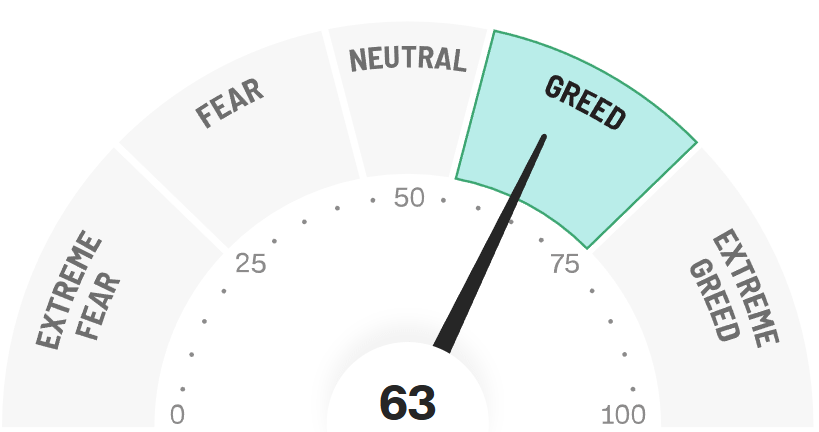
That does not mean stocks must fall.
But it does mean the easy bargains are probably harder to find.
When sentiment is fearful, investors often get paid for buying quality businesses that are temporarily hated.
When sentiment is greedy, investors need to be much more disciplined.
That is why I do not want to chase the market blindly here.
I want to know which stocks still have potential upside, which sectors are still unloved, and which names may be worth researching if volatility creates a better entry point.
This Is Not A Market Where Everything Is Moving Together
The heatmap also tells an important story.
Some large technology and AI-related names continue to dominate attention. Energy has been strong. Healthcare has seen pockets of strength and weakness. Financials, industrials, consumer names, and software are all moving very differently.
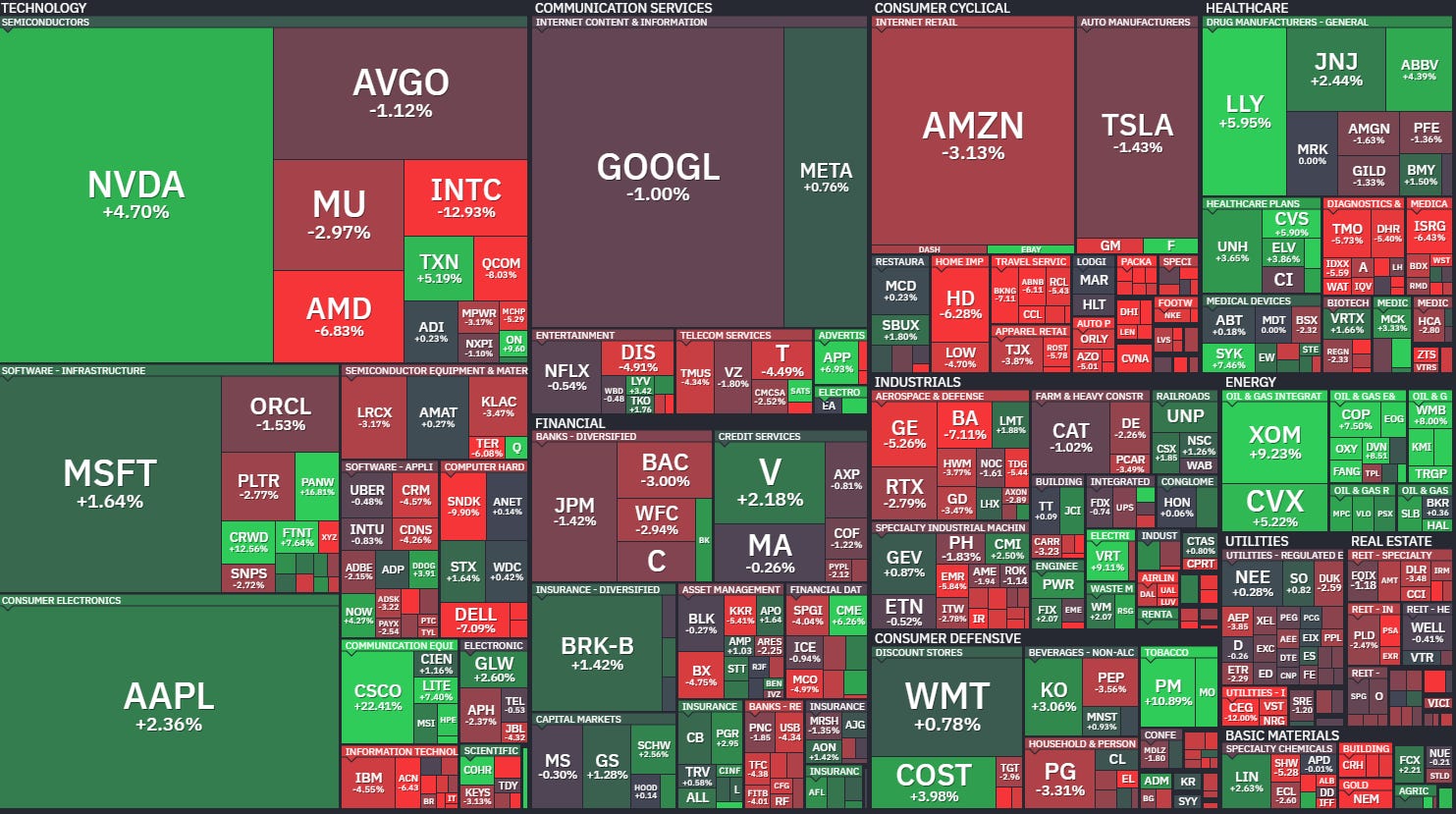
This is not a market where every stock is cheap.
But it is also not a market where there are no opportunities.
That is why I think a structured screen can be useful.
Not because it tells us exactly what to buy.
But because it helps us narrow the market down into a more useful research list.
A good screen is not the final answer.
It is the starting point.
Earnings Season Can Still Create Opportunities
We also have another important week of earnings ahead.
There are several major companies reporting, including names across semiconductors, retail, software, consumer, healthcare, industrials, and technology.
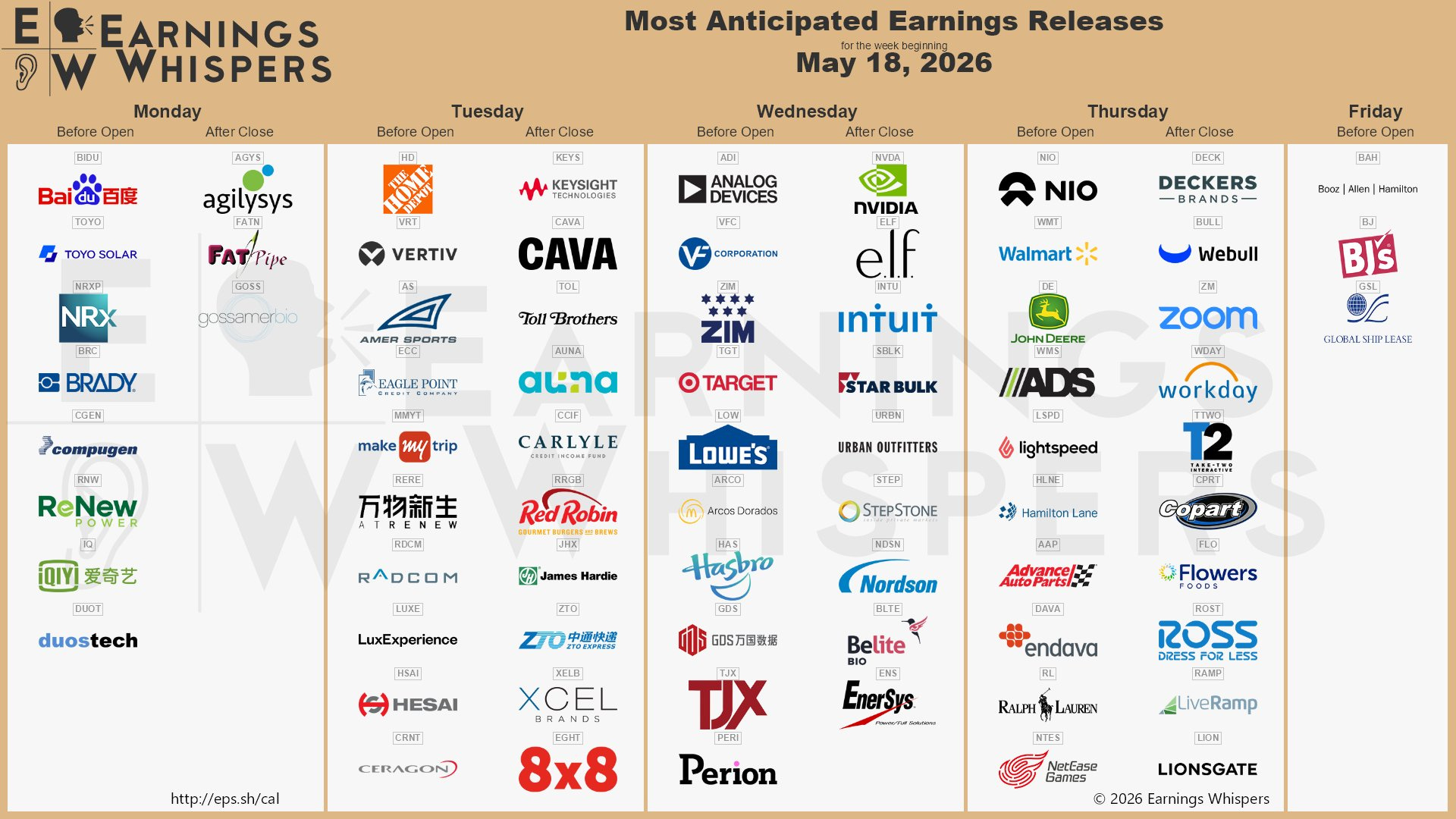
This matters because earnings season often creates volatility.
Sometimes stocks fall because the long-term thesis has genuinely changed.
But other times, stocks fall because expectations were too high, guidance was misunderstood, or the market reacts emotionally to short-term noise.
That is where opportunity can appear.
The best time to build a watchlist is before volatility hits.
Because when a high-quality business suddenly drops, you do not want to start your research from zero.
You want to already know what you are looking for.
If you find this market update useful, please consider sharing it.
It helps more investors find the newsletter and allows me to keep building deeper research tools for subscribers.
The Better Question
So no, I do not think “sell in May and go away” is the right framework.
The better framework is:
What should I be preparing to buy if the market gives me a better opportunity?
That is the purpose of this month’s paid spreadsheet.
I screened hundreds of stocks for high-upside potential and then organised the results into a more useful research tool for paid subscribers.
The goal is not to say every stock on the list is a buy.
For paid subscribers, the full spreadsheet is available below - including the ranked Top 25 ideas, sector dashboard, risk flags, methodology, and complete high-upside stock screen.
Paid subscribers get access to the full May High-Upside Stock Screen, plus all future premium spreadsheets and weekly research.
If you want the full workbook and future paid research, you can upgrade below.