


The easiest mistake in dividend investing is confusing a higher yield with a better opportunity.
A dividend yield usually rises because a share price has fallen. Sometimes that creates an unusually attractive entry point into a high-quality business.
Other times, the share price is falling for a very good reason.
The dividend may be growing more slowly. Earnings expectations may be too optimistic. Debt may be rising. Or the company may deserve a permanently lower valuation than it received in the past.
That distinction matters even more in the current market.
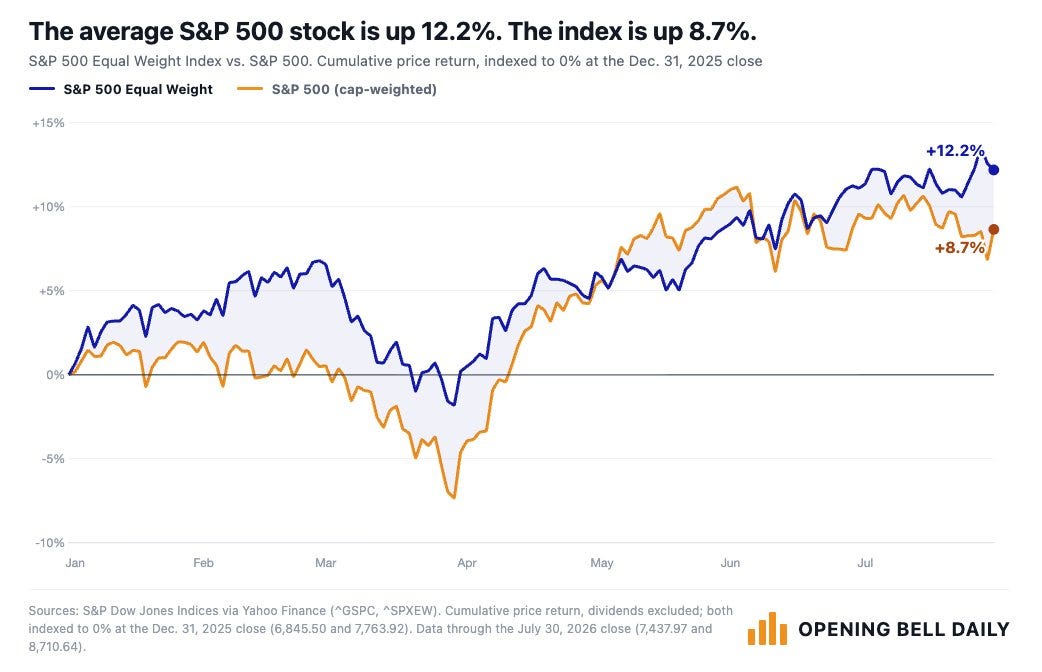
The underlying market has broadened considerably. The average S&P 500 stock is up 12.2% this year, compared with an 8.7% gain for the traditional market-cap-weighted index.
The equal-weight S&P 500 has also reached a new high.
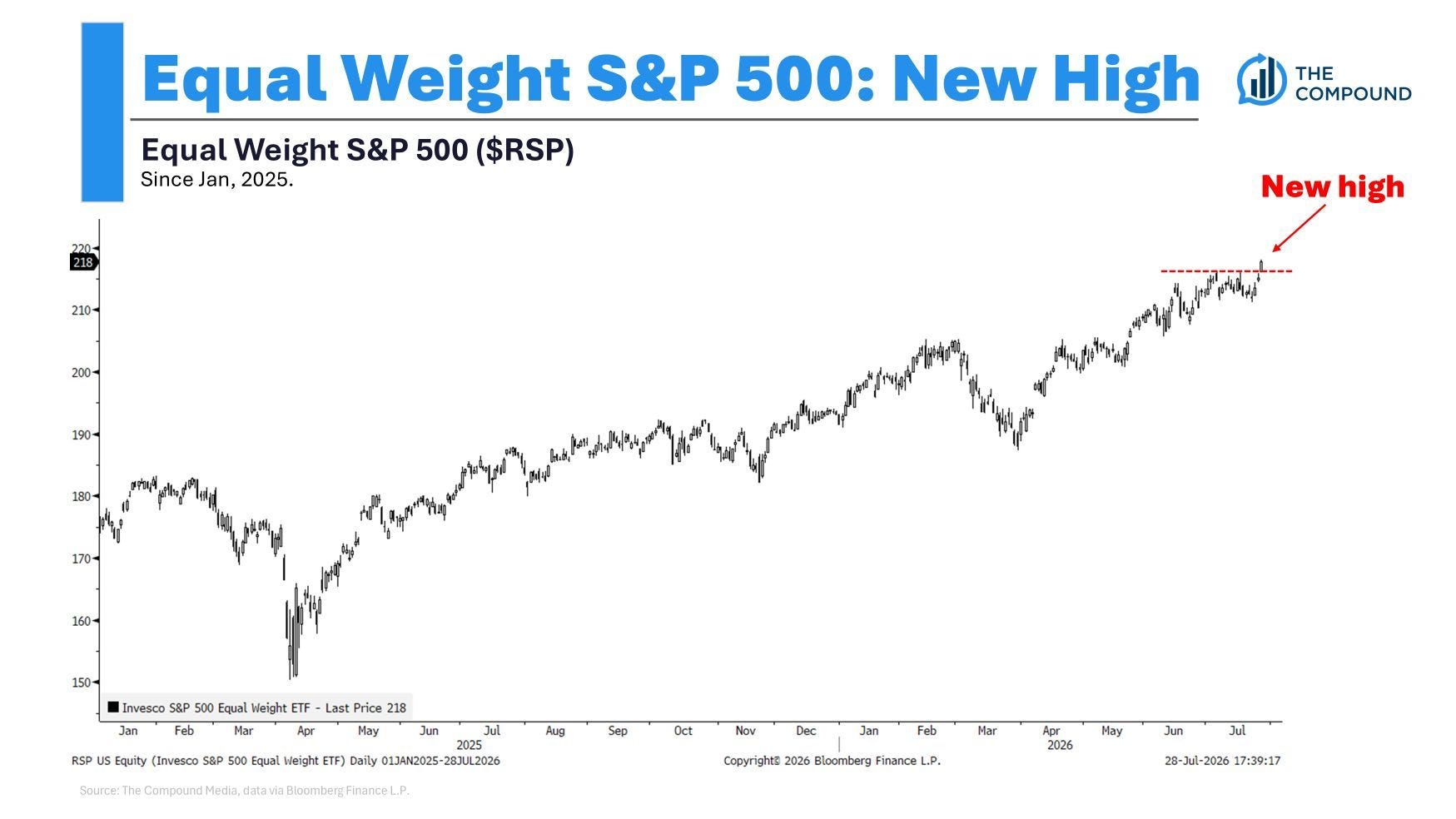
This is encouraging.
It suggests the market is no longer being supported exclusively by a narrow group of mega-cap technology companies. More businesses and sectors are beginning to participate.
The earnings backdrop also remains strong.
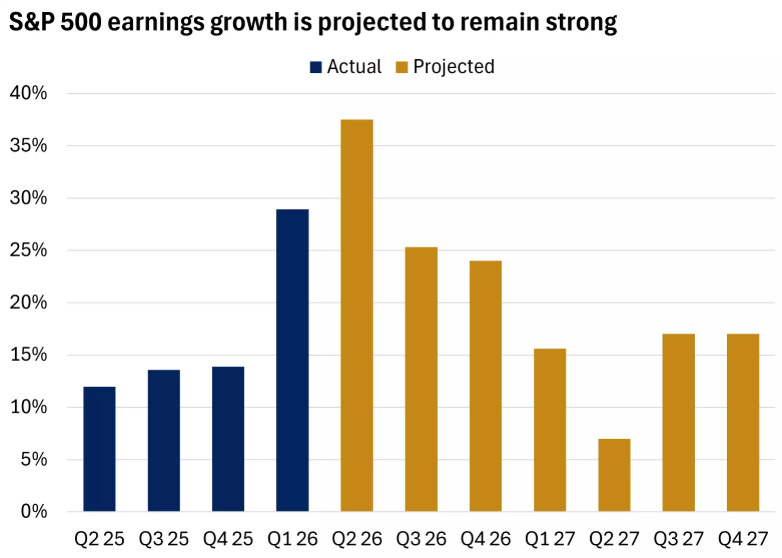
Second-quarter S&P 500 earnings growth is now projected at approximately 37%, with analysts expecting positive growth across every subsequent quarter shown through the end of 2027.
But this is not an environment in which investors can afford to buy every stock that appears cheaper than it was six months ago.
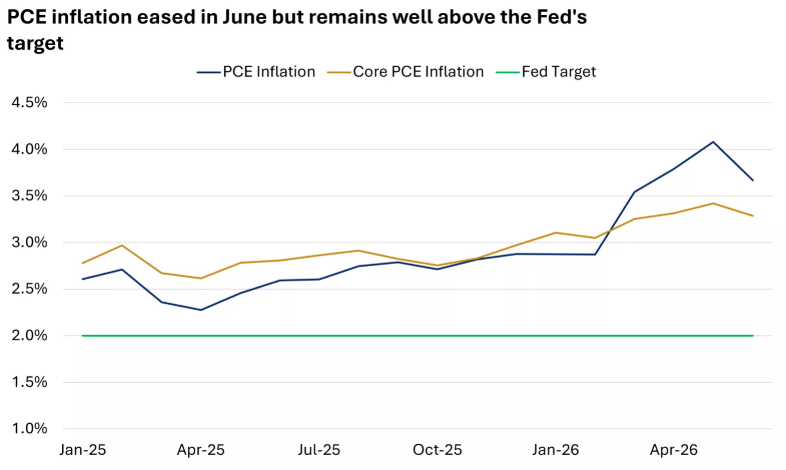
Headline PCE inflation eased in June but remains at 3.7%. Core PCE, which excludes the more volatile food and energy categories, remains elevated at 3.3%.
Both remain well above the Federal Reserve’s 2% target.
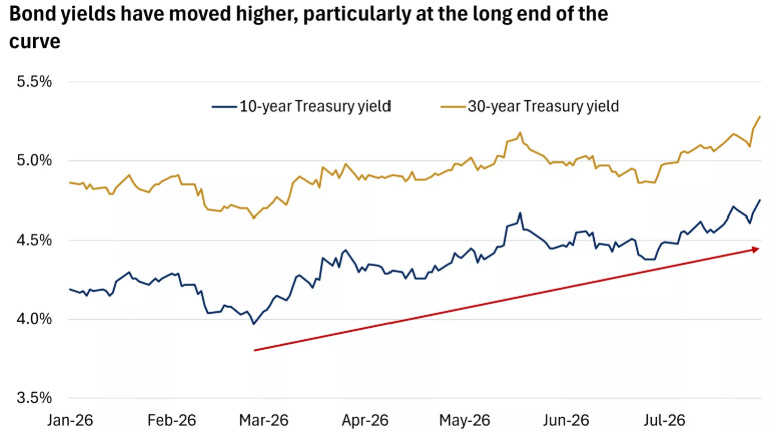
Bond markets have responded.
Treasury yields have moved higher, particularly at the long end of the curve. Higher bond yields increase the return available from lower-risk assets and raise the return investors should demand before taking equity risk.
They also reduce the present value of future cash flows, placing additional pressure on companies whose valuations depend heavily on distant growth.
August and September have also historically been the weakest months of the year for stocks, producing average monthly returns of -0.49% and -0.72%, respectively, since 1990.
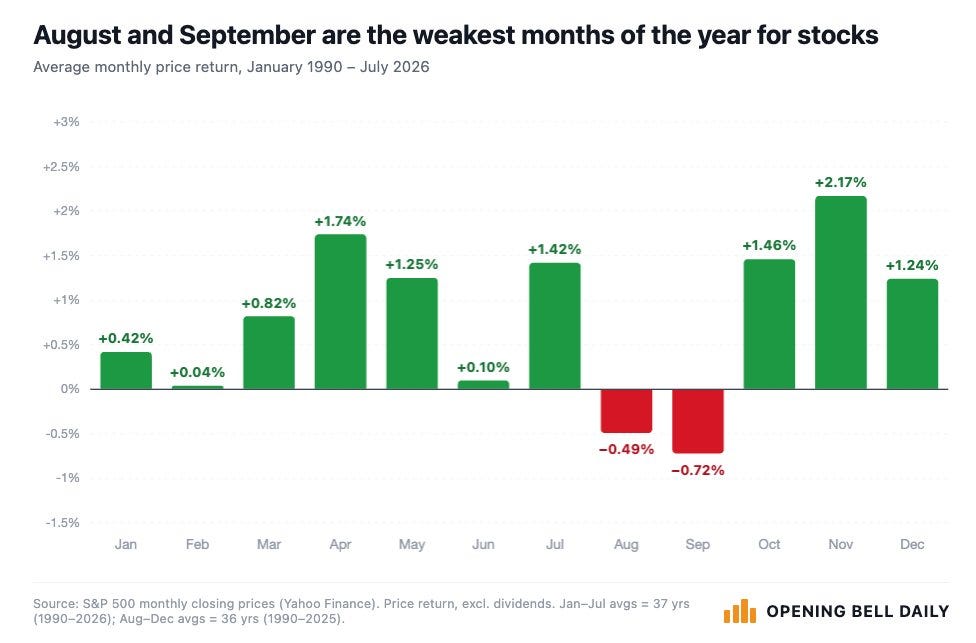
Seasonality is never enough reason to sell a good business.
But sticky inflation, elevated yields and weaker seasonal trends all reinforce the same conclusion:
This is a market for selection, not blind optimism.
So rather than searching for the highest yields, I looked for dividend-paying companies capable of passing a much more demanding test.
How I built the shortlist
I started with a dividend-focused universe of 76 companies.
I then compared them using the following criteria:
Dividend safety rated at least “Borderline Safe”
Dividend yield above 1%
At least 10 consecutive years of dividend growth
A valuation that appeared reasonable or undervalued
A yield in line with, or above, its historical average
Zero or relatively low net debt to EBITDA
A P/E multiple in line with, or below, its historical average
Positive free cash flow in each of the past 10 years
Return on invested capital above 10%
The aim was to find companies offering more than income alone.
I wanted a combination of:
Dividend safety. Financial strength. Cash-flow consistency. Profitability. Valuation.
Five companies ranked highest.
Every one currently offers a higher dividend yield than its five-year average.
Every one trades at a lower forward P/E than its five-year average.
But that does not automatically make all five equally attractive.
The screening estimates discussed below are starting points for further analysis, not guaranteed price targets. The final ratings also remain consistent with the full August stock report published a few days ago, which you can read below:

Get the next stock screen free
I publish valuation-led stock research, earnings breakdowns and market analysis throughout the month.
Amdocs
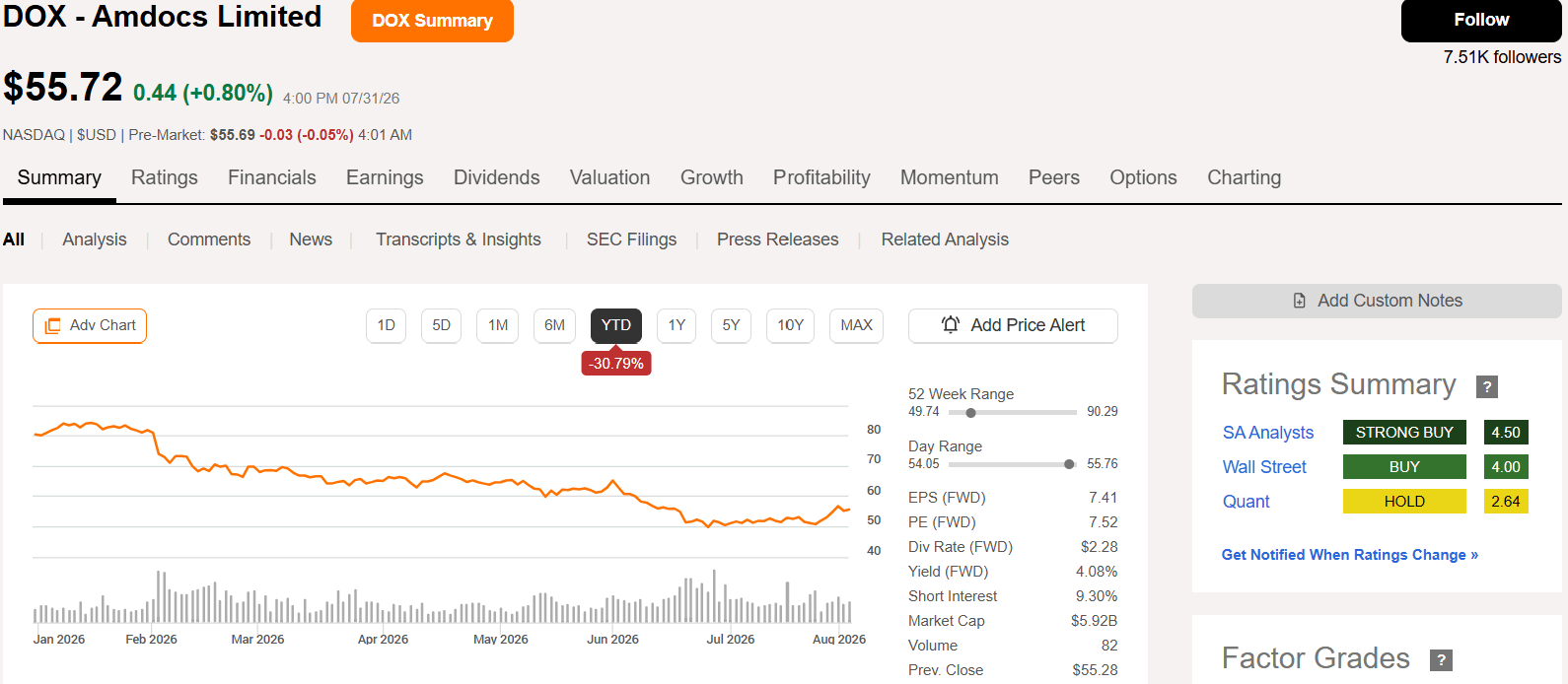
Amdocs is the least widely followed company in this group, but it may be the clearest traditional value opportunity.
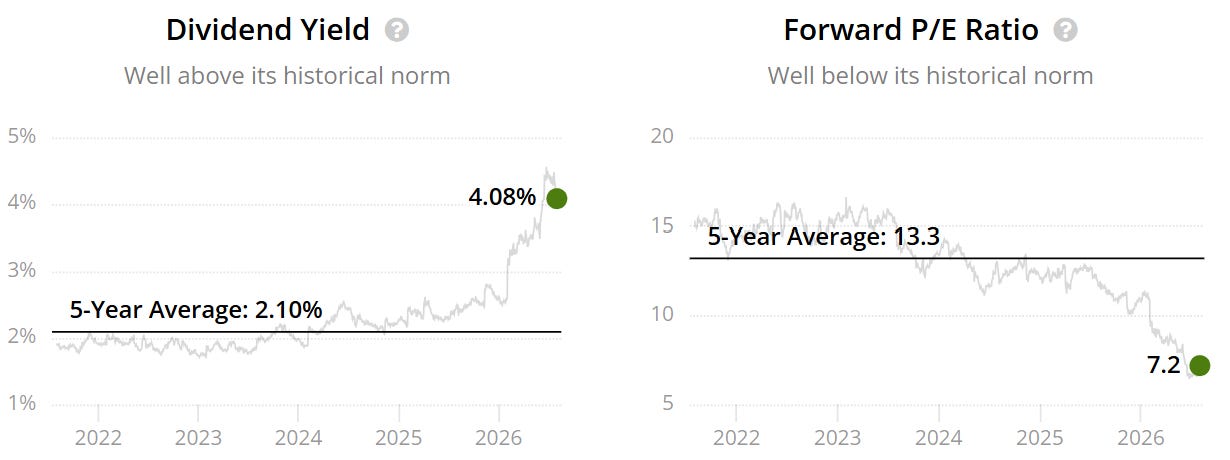
The shares currently offer a 4.08% dividend yield, compared with a five-year average of 2.10%.
Its forward P/E has fallen to just 7.2 times earnings, against a five-year average of 13.3 times.
The Numbers That Matter
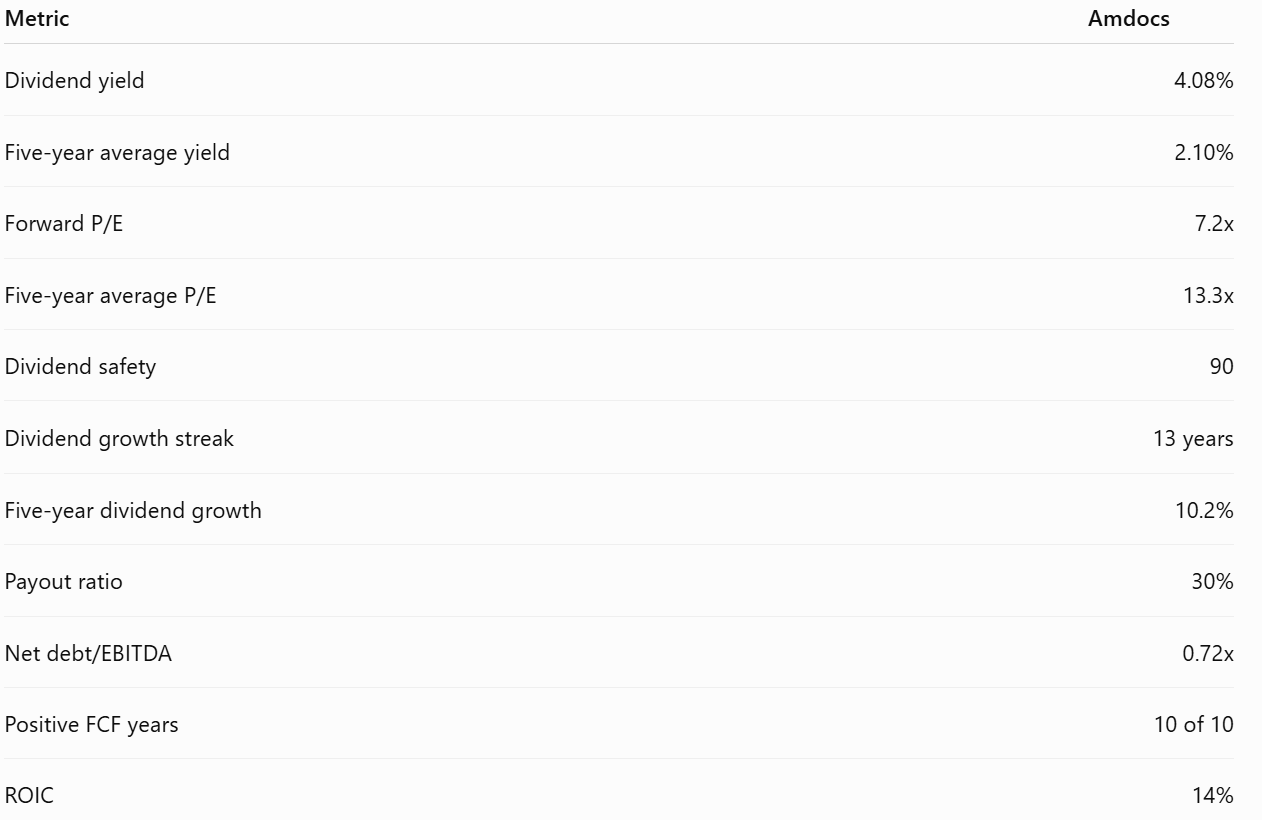
This is one of the most balanced income profiles in the screen.
The 4.08% yield is meaningful, but Amdocs is only distributing around 30% of earnings as dividends.
That gives the company considerable flexibility to continue investing, repurchasing shares, reducing debt and raising the dividend.
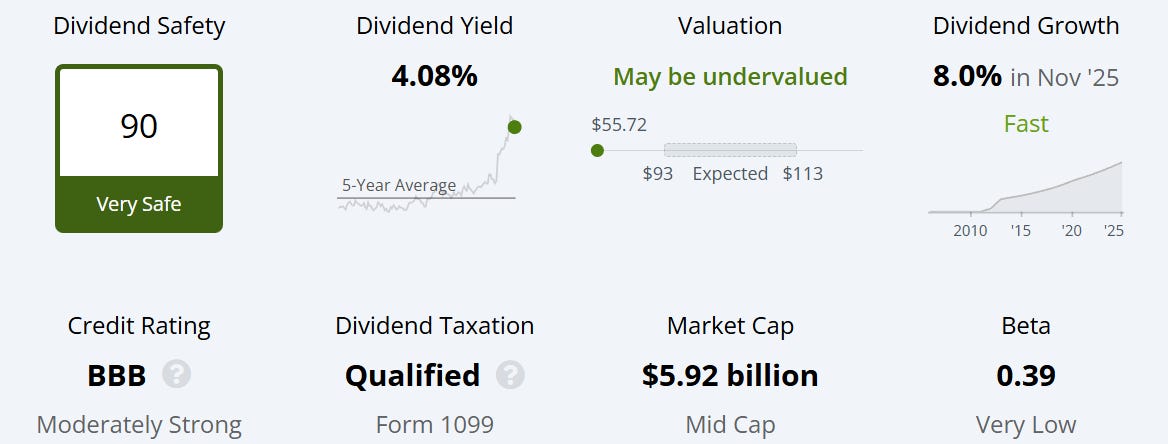
Amdocs also carries:
A dividend safety rating of 90
Relatively low leverage
A 13-year dividend growth streak
Double-digit five-year dividend growth
Positive free cash flow in every year of the past decade
The business does not require spectacular growth to generate an attractive return at seven times forward earnings.
However, a valuation this low rarely appears without concerns.
The market is questioning the company’s growth outlook, customer spending and the pace at which its backlog will convert into revenue.
That makes the durability of the current earnings base more important than the apparent discount alone.
Amdocs could remain inexpensive for an extended period if growth continues to disappoint.
But if earnings prove resilient, the current yield and valuation provide a compelling starting point.
Badger Meter
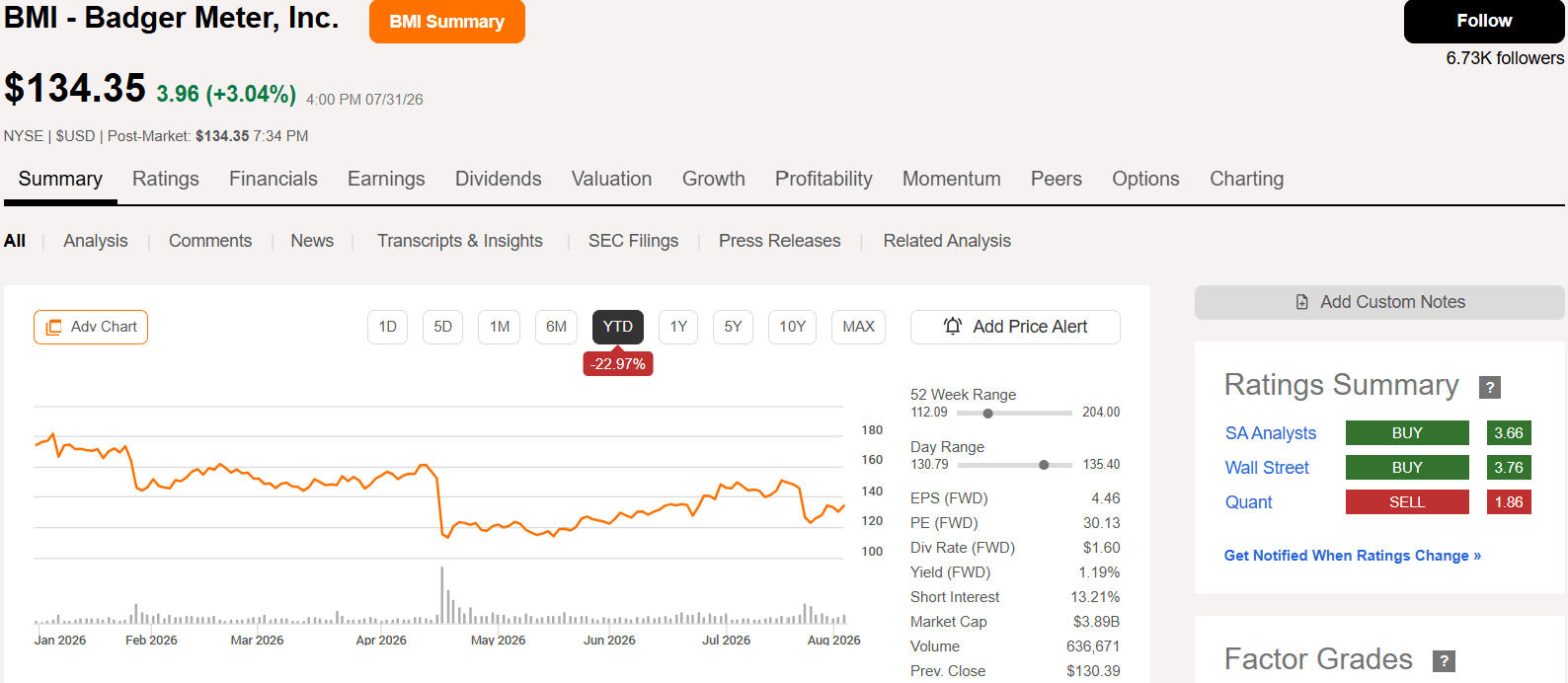
Badger Meter possesses arguably the cleanest financial profile in this group.
It has:
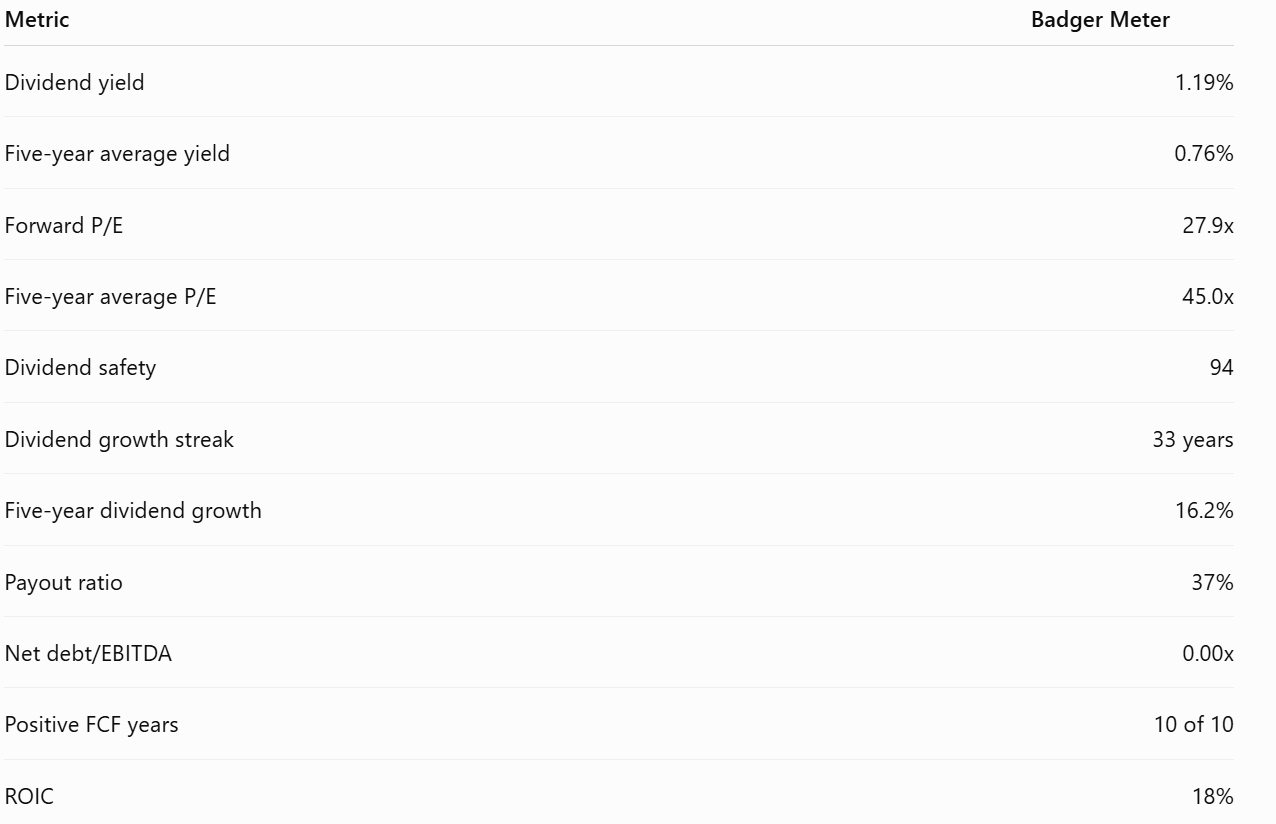
Zero net debt
Positive free cash flow in every year of the past decade
A dividend safety rating of 94
A 33-year dividend growth streak
An 18% return on invested capital
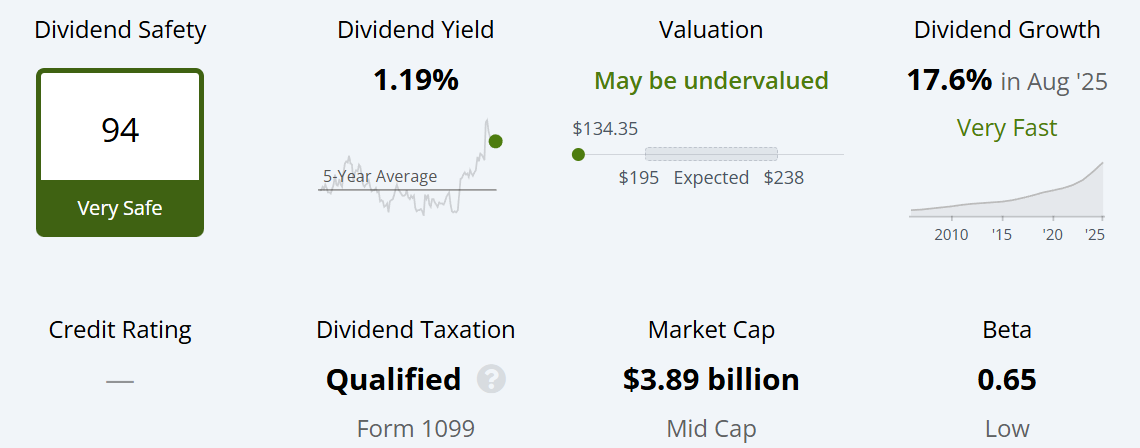
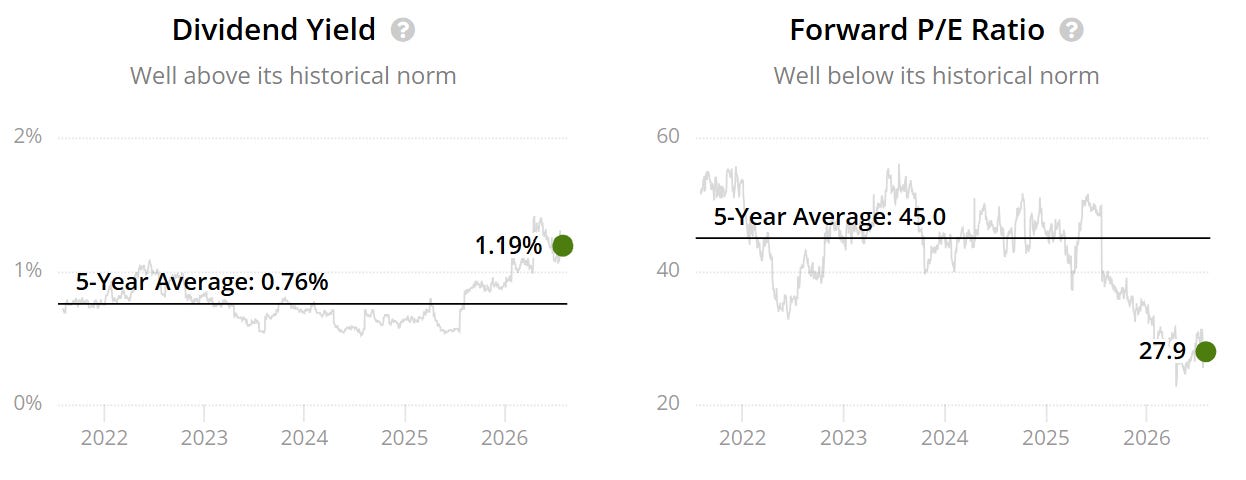
Its dividend yield of 1.19% remains modest in absolute terms, but it is well above the company’s five-year average of 0.76%.
Its forward P/E has also fallen to 27.9 times earnings, compared with a five-year average of 45 times.
The Numbers That Matter
Badger Meter has also delivered the fastest recent dividend growth of the five finalists.
Its latest dividend increase was 17.6%, while the payout has grown at approximately 16.2% annually over the past five years.
Few companies can combine that level of dividend growth with no net debt and an 18% return on invested capital.
The problem is that Badger Meter remains expensive in absolute terms.
A 27.9 times forward P/E is significantly lower than the company’s historical average, but it is not a traditional value multiple.
That means future returns will remain dependent on the company maintaining strong earnings growth.
If growth slows, the multiple could compress further, even if the underlying business remains healthy.
Badger Meter is a considerably more attractive investment than it was at 45 times earnings.
That does not automatically mean it offers the best margin of safety today.
FactSet
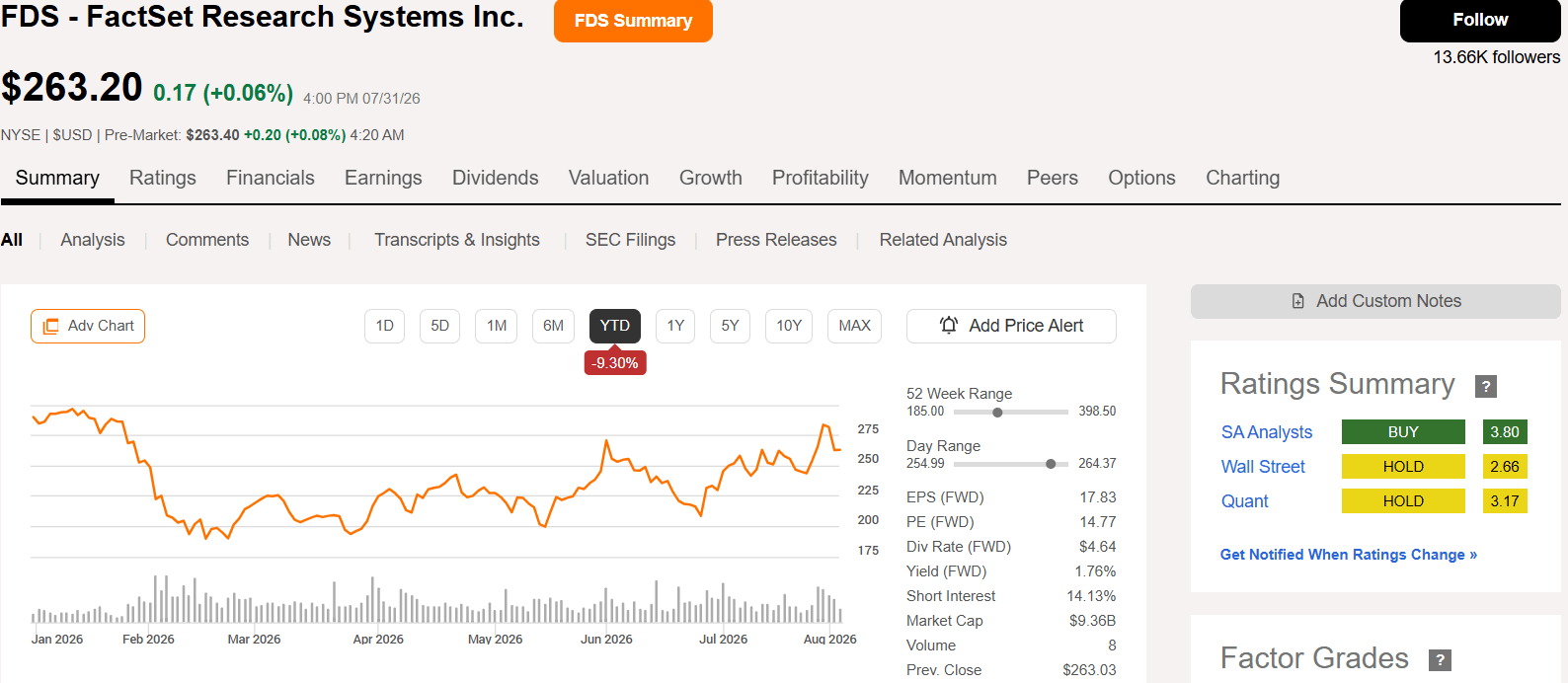
FactSet is a high-quality recurring-revenue business that has experienced a significant valuation reset.
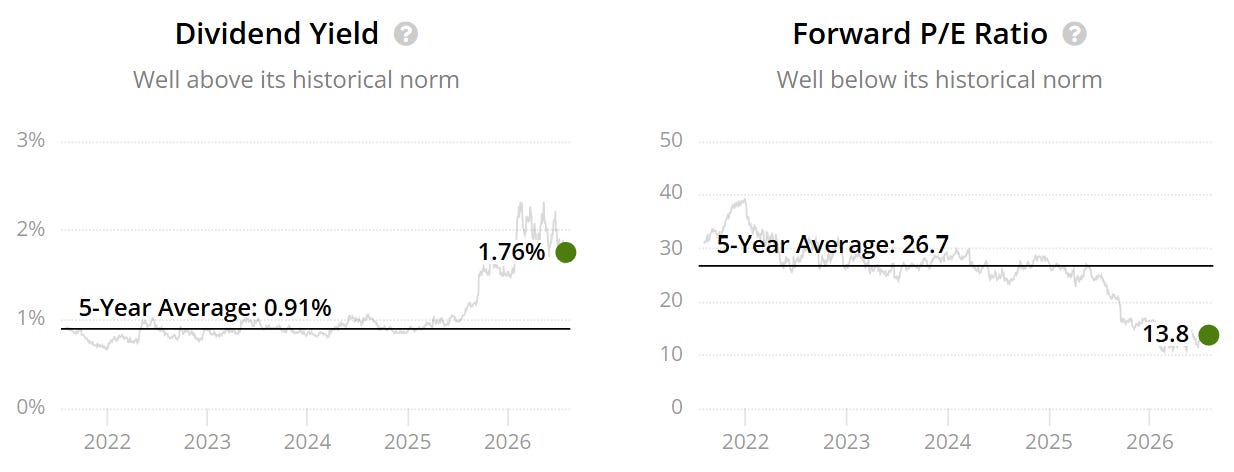
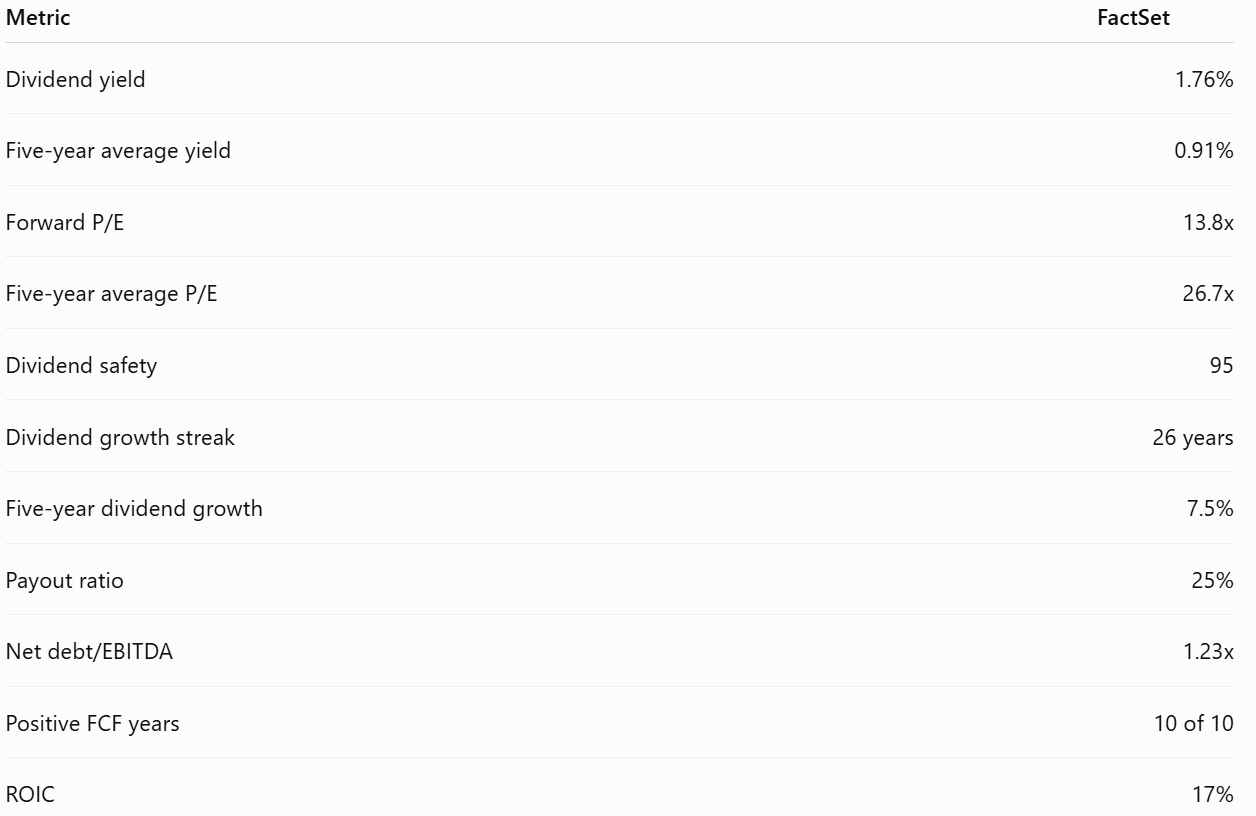
Its dividend yield has climbed to 1.76%, almost double its five-year average of 0.91%.
Its forward P/E has also fallen to approximately 13.8 times earnings, compared with a five-year average of 26.7 times.
The Numbers That Matter
The dividend profile is excellent.
FactSet has increased its dividend for 26 consecutive years while distributing only around 25% of earnings.
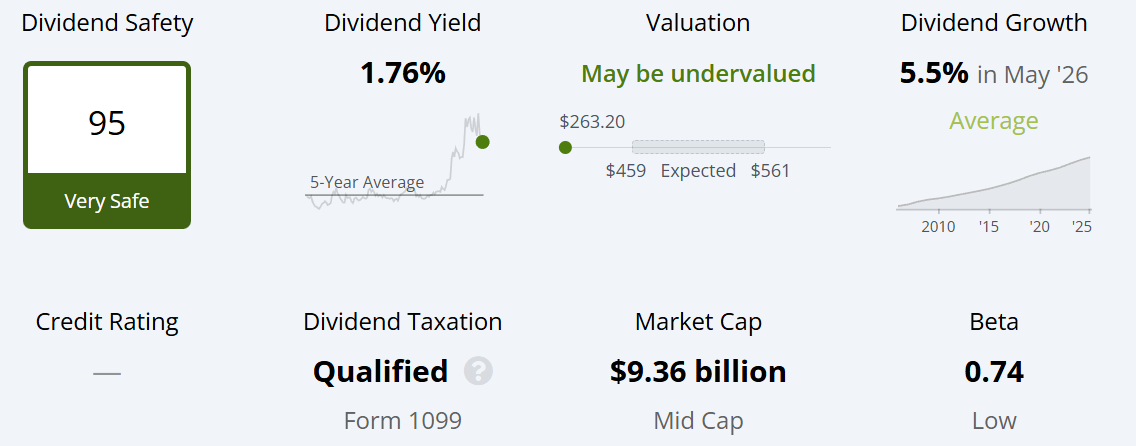
Its dividend safety rating of 95 is the highest among the five finalists.
The company has also produced:
Positive free cash flow in every year of the past decade
A 17% return on invested capital
High levels of recurring revenue
Considerable room for future dividend growth
The issue is not business quality.
It is the growth rate investors should reasonably expect from here.
A company can possess a strong balance sheet, recurring revenue and an outstanding dividend record while still deserving a lower valuation if its growth outlook has weakened.
For FactSet, annual subscription value growth and customer retention will be important.
The current multiple is unusually low relative to history, but I would want stronger evidence that operating momentum is stabilising before assuming the shares should return to their previous valuation.
FactSet is a compelling company.
Whether it is a compelling investment at this exact moment is a more difficult question.
Novo Nordisk
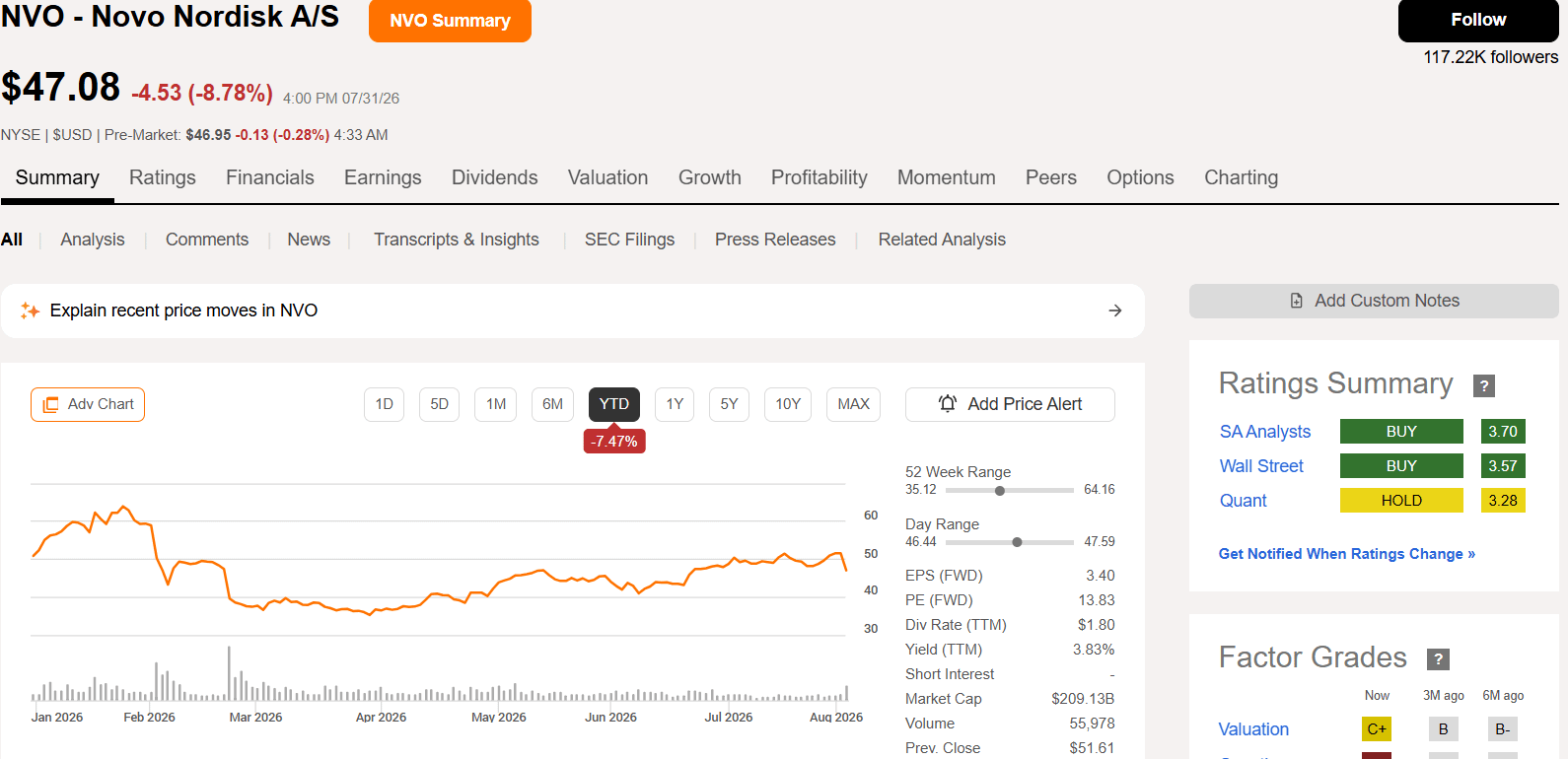
Novo Nordisk has experienced a substantial valuation reset despite retaining unusually strong profitability.
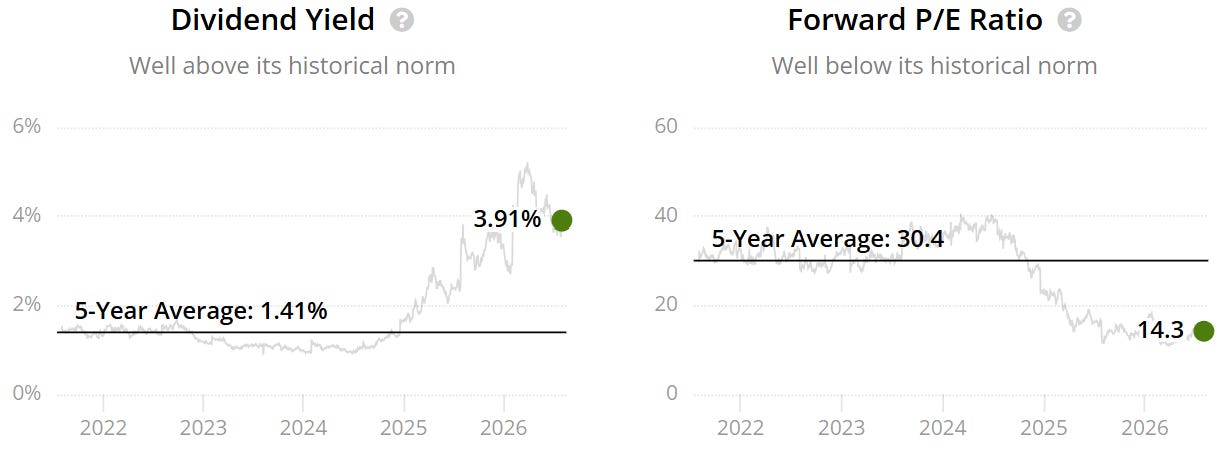
Its dividend yield has risen to 3.91%, compared with a five-year average of just 1.41%.
At the same time, its forward P/E has fallen to approximately 14.3 times earnings, less than half its five-year average of 30.4 times.
The Numbers That Matter
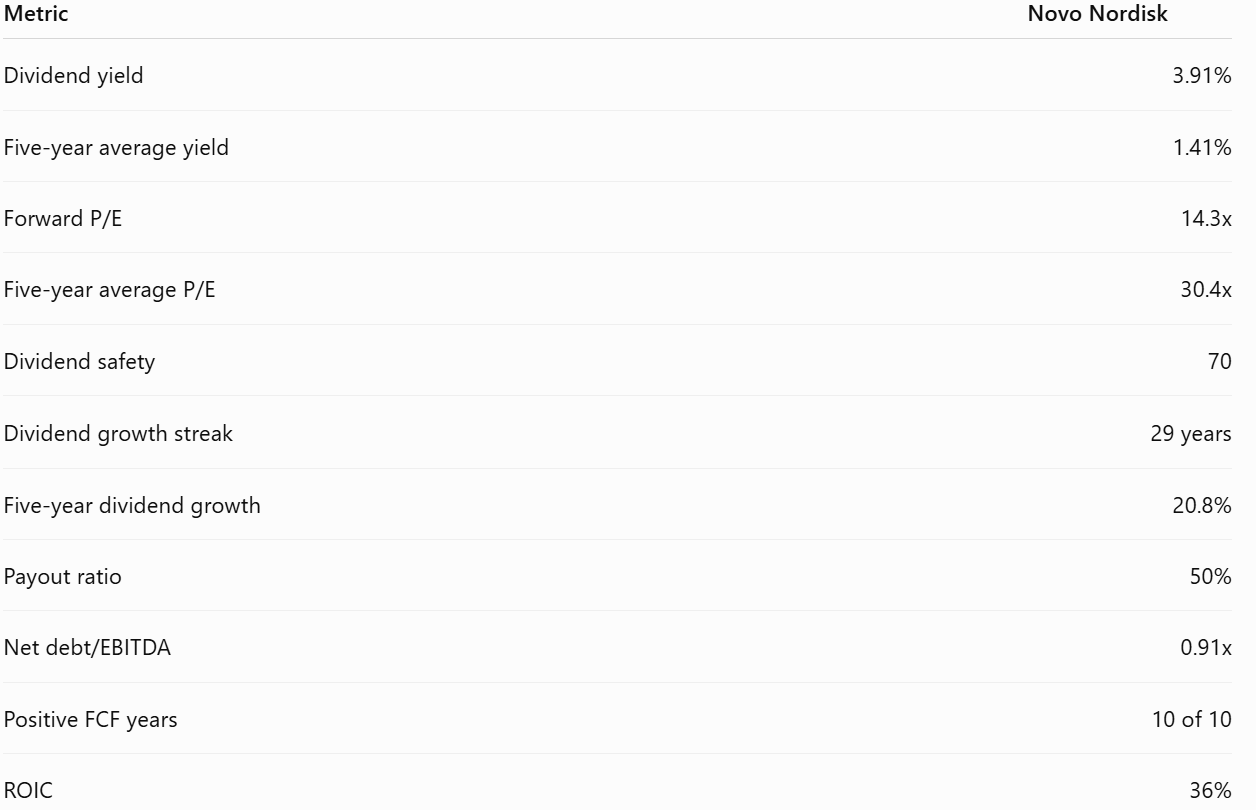
The 36% return on invested capital immediately stands out.
It means Novo Nordisk has historically generated an unusually high level of operating profit relative to the capital required to run the business.
The company has also:
Generated positive free cash flow in every year of the past decade
Increased its dividend for 29 consecutive years
Maintained net debt below one times EBITDA
Delivered dividend growth of more than 20% annually over the past five years
The current valuation clearly reflects genuine concerns.
Novo Nordisk faces increasing competition, pricing pressure, execution risk and the normal uncertainties attached to a concentrated pharmaceutical portfolio.
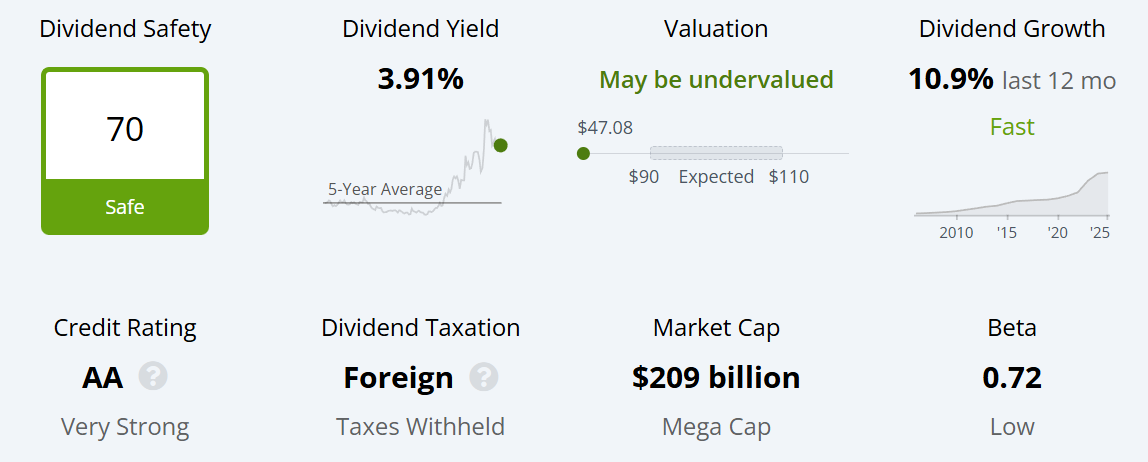
The company’s dividend safety rating of 70 is also lower than those of the other four finalists.
International investors may additionally need to account for currency movements and dividend withholding tax.
Those risks cannot be dismissed.
But neither can the valuation.
Novo Nordisk’s yield is almost three times its five-year average, while its earnings multiple has been cut by more than half.
The market is no longer valuing the company as a flawless growth story.
The question is whether it has now moved too far in the opposite direction.
PepsiCo
PepsiCo represents a different type of opportunity.
Novo Nordisk and Amdocs screen as deeper-value candidates. PepsiCo is primarily a defensive income opportunity.
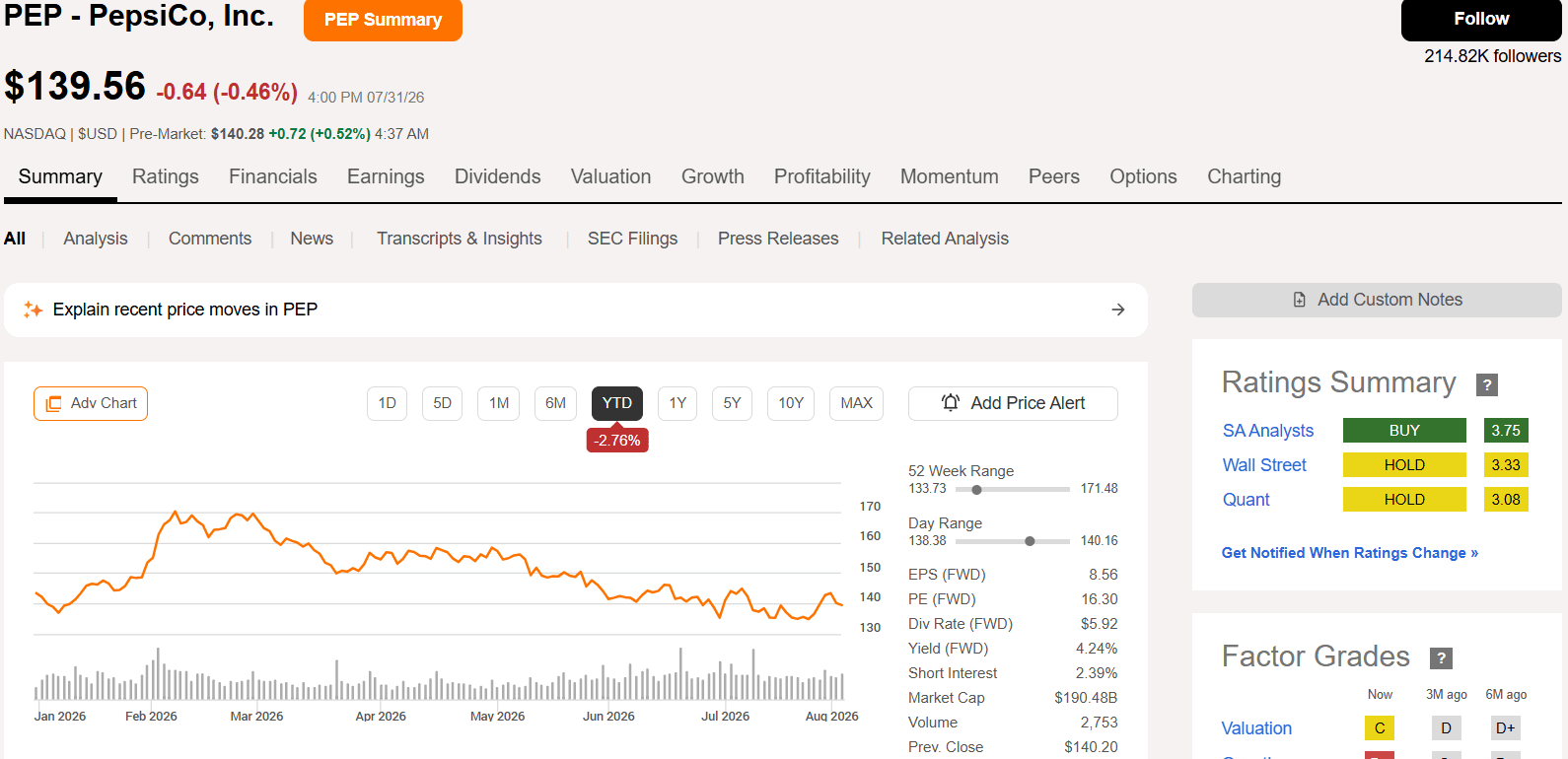
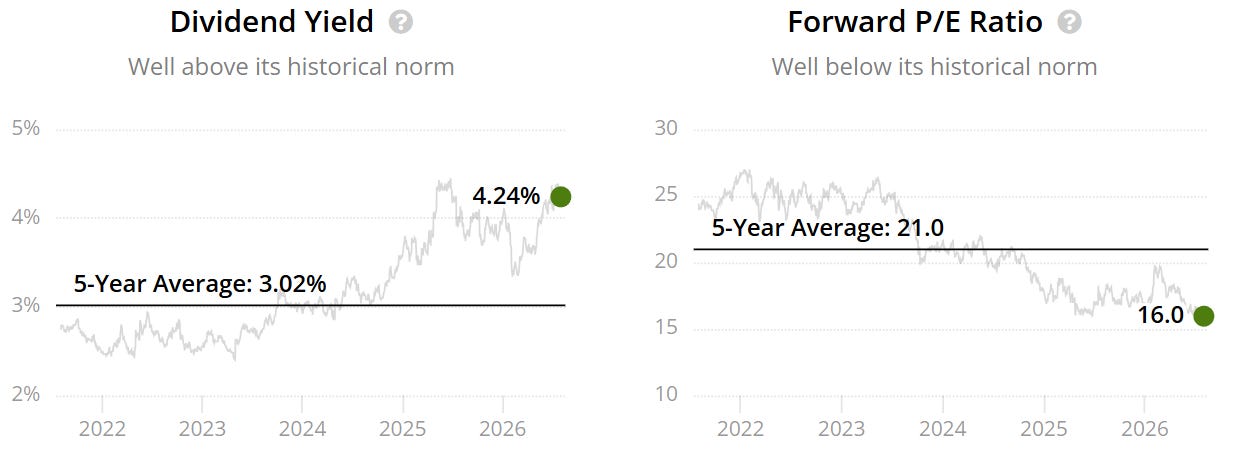
Its dividend yield has risen to 4.24%, compared with a five-year average of 3.02%.
Meanwhile, the shares trade at approximately 16 times forward earnings, below their five-year average of 21 times.
The Numbers That Matter
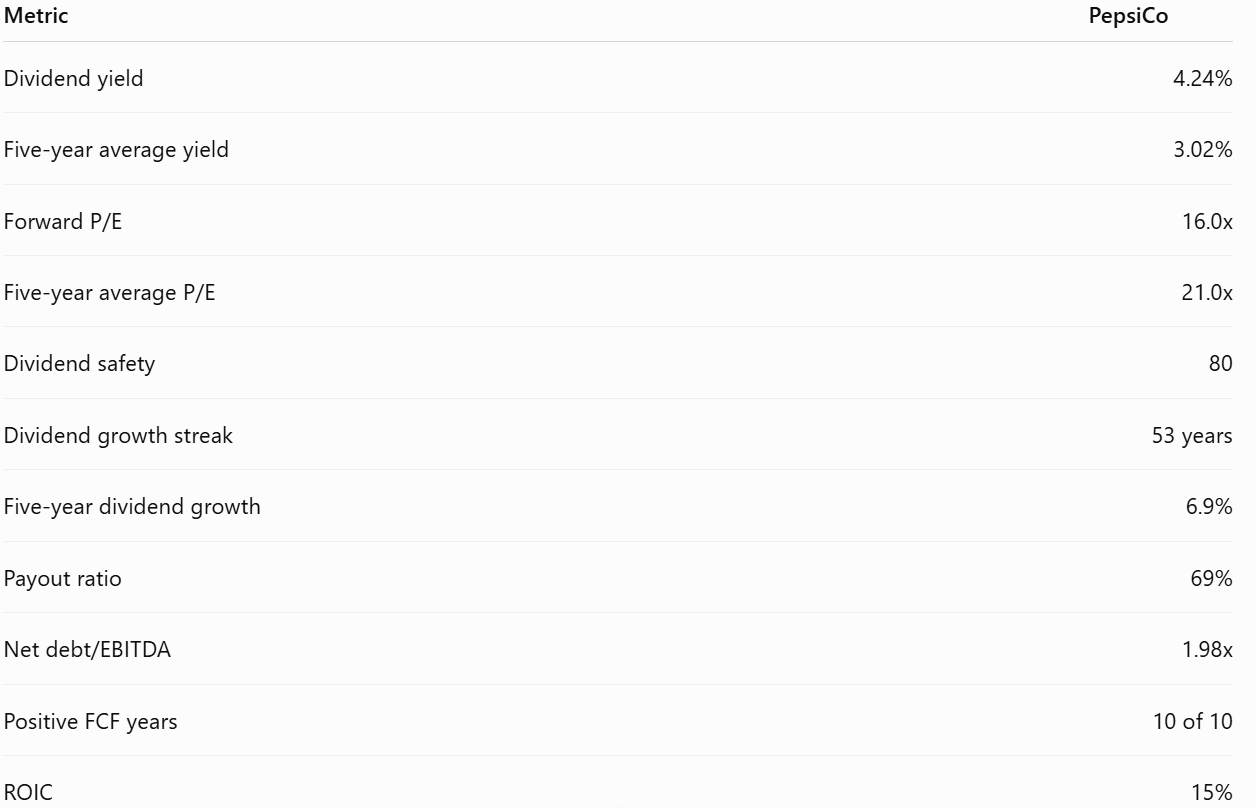
PepsiCo’s greatest strength is consistency.
The company has increased its dividend for 53 consecutive years and continued rewarding shareholders through multiple recessions, inflationary periods and market declines.
It has also generated positive free cash flow in every year of the past decade.
The current 4.24% yield is unusually high relative to PepsiCo’s recent history.
That gives investors a much more attractive income starting point than was available when the company traded above 20 times earnings.
The trade-off is slower growth and less financial flexibility.
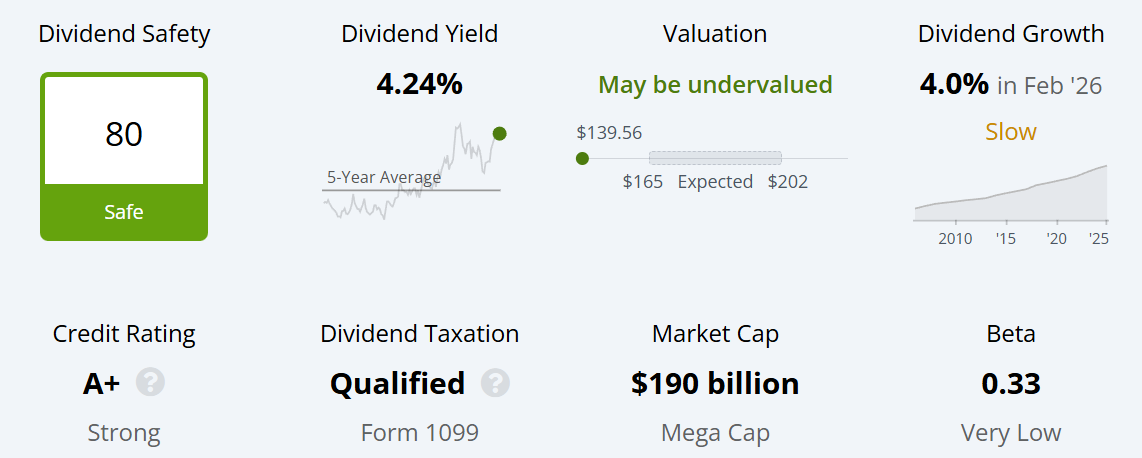
PepsiCo’s payout ratio of 69% is the highest among these five companies. Net debt to EBITDA is also close to two times.
Neither figure necessarily places the dividend at immediate risk, but they leave less room for rapid dividend growth if earnings remain under pressure.
The thesis therefore depends on PepsiCo stabilising volumes, protecting margins and converting productivity improvements into stronger earnings growth.
For investors focused primarily on income and defensive exposure, the shares are becoming increasingly interesting.
For investors seeking the highest total-return potential, there may be stronger opportunities elsewhere in the group.
Finding genuinely attractive dividend stocks is difficult
High yields often appear just before dividend growth slows or business fundamentals deteriorate.
If this analysis helped you separate the opportunity from the headline yield, please share it with another long-term investor.
The screen produced five finalists.
The hard part comes next. All five passed the initial screen. But they did not survive the deeper analysis equally well.
One remains expensive despite its decline. Another offers dependable income but limited growth. One appears exceptionally cheap, yet carries risks that explain part of the discount.
After comparing dividend safety, valuation, cash-flow durability, profitability, balance-sheet strength and downside risk, only one retained my highest rating.
And it was not simply the stock with the highest yield or lowest P/E.
Continue with a paid subscription to unlock:
My complete ranking from #5 to #1
The hidden weakness preventing four stocks from earning my top rating
The single company rated Buy in tranches
How I would approach building the position
The clean premium spreadsheet containing all 76 screened companies